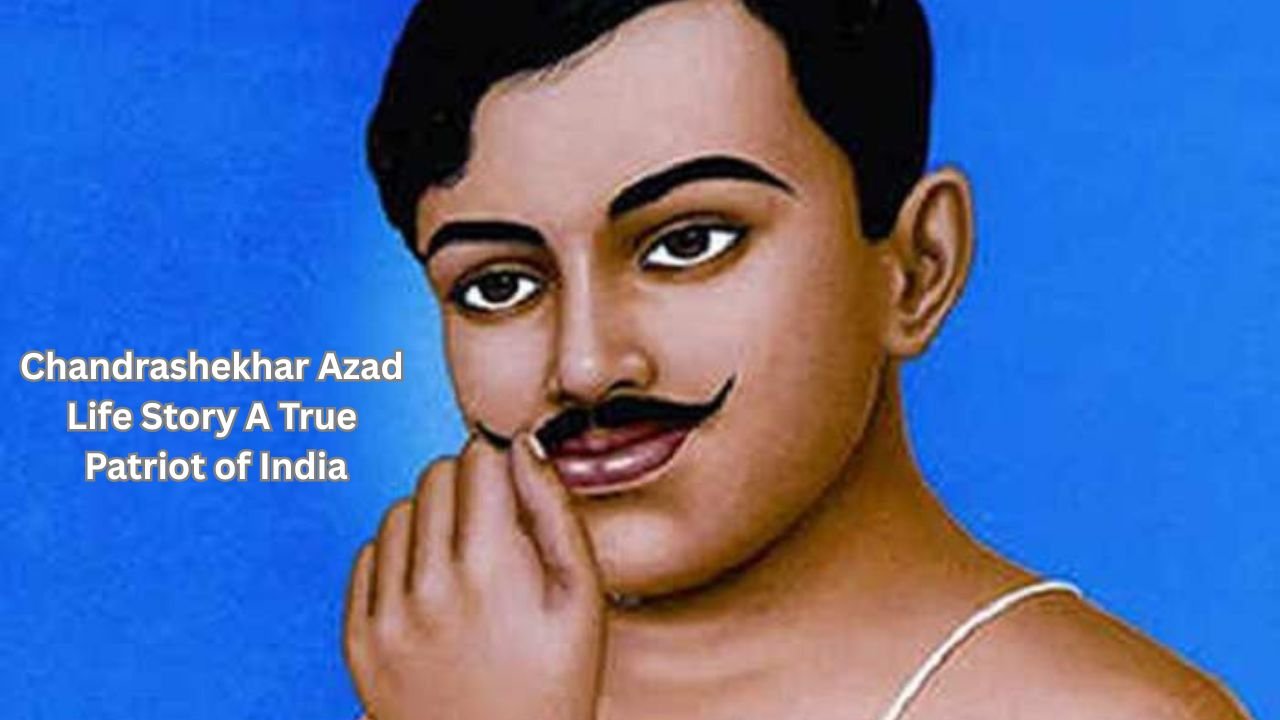
Chandrashekhar Azad Life Story A True Patriot of India (1906–1931) was one of the most fearless revolutionaries in India’s freedom struggle. He is remembered for his courage, strong will, and love for the nation. His life story inspires millions even today.
Early Life Chandrashekhar Azad (1906 – 1919)
Chandrashekhar Azad was born on 23 July 1906 in Bhavra village, Madhya Pradesh. His father was Sitaram Tiwari, and his mother was Jagrani Devi.
Did Chandrashekhar Azad Marry?
No, Chandrashekhar Azad never married.
From the early 1920s, he made a clear decision to dedicate his life to the country. He believed that marriage could distract him from his mission of freeing India from British rule.
Reasons for Not Marrying (1920s)
During the 1920s, Azad lived a dangerous life as a revolutionary.
Main Reasons:
- Full dedication to India’s freedom struggle
- Constant movement to escape British police
- Risky and secret lifestyle
- Strong belief in sacrifice and duty
Because of these reasons, he chose not to marry.
Did Chandrashekhar Azad Have Children?
No, Chandrashekhar Azad had no children.
Since he never married, he did not have a wife or children. His only goal was to serve the nation.
He received his primary education in his village. His early learning was simple, but he was very active, intelligent, and interested in physical activities like wrestling and archery.
Move to Varanasi for Studies (1916 – 1921)
For higher education, Azad moved to Varanasi around 1916–1917.
In Varanasi, he studied Sanskrit at a traditional school (Gurukul-style learning). This education helped him understand Indian culture, values, and history.
During this time, he also developed strong patriotic feelings and started thinking about India’s freedom.
Influence of National Movements (1921)
In 1921, while still a student, Azad joined the Non-Cooperation Movement led by Mahatma Gandhi.
This was a turning point in his life. His focus shifted from formal education to the freedom struggle. Chandrashekhar Azad Life Story A True Patriot of India
End of Formal Education (1921 – 1922)

After his arrest during the movement in 1921, Azad slowly left his formal studies.
By 1922, he had completely dedicated himself to revolutionary activities. His classroom education stopped, but his real-life learning began.
Learning Through Revolutionary Life (1922 – 1931)
From 1922 to 1931, Azad gained practical knowledge through his work as a revolutionary.
What He Learned:
- Leadership and planning
- Use of weapons and survival skills
- Discipline and teamwork
- Political awareness and patriotism
He worked with revolutionaries like Bhagat Singh and became a strong leader.
Education Beyond Books
Even though Azad did not complete higher formal education, he became highly knowledgeable through experience.
His life shows that education is not only from books but also from real-life actions and dedication.
Entry into Freedom Movement (1921)
In 1921, at just 15 years old, Azad joined the Non-Cooperation Movement led by Mahatma Gandhi.
This movement encouraged Indians to protest peacefully against British rule by refusing to cooperate with the government.
What Azad Did:
- Participated in protests and rallies
- Raised slogans against British rule
- Inspired others to join the movement
This was his first active step in the freedom struggle.
Arrest and the Name “Azad” (1921)
During the protests in 1921, Chandrashekhar was arrested by British police.
In court, he gave bold answers:
- Name: Azad (Free)
- Father’s Name: Swatantrata (Freedom)
- Address: Jail
The judge punished him with a whipping, but he did not cry or show fear. From that moment, he became famous as Chandrashekhar Azad.
Impact of 1921 on His Life
The events of 1921 completely changed Azad’s life.
Key Changes:
- Became a committed freedom fighter
- Left normal student life
- Developed a fearless attitude
- Inspired many young Indians
This year marked the beginning of his revolutionary journey.
After the Movement (1922 and Beyond)
In 1922, the Non-Cooperation Movement ended. After this, Azad chose a more aggressive path of revolution.
He joined revolutionary groups and later worked with leaders like Bhagat Singh to fight British rule.
Becoming a Revolutionary (1922 – 1925)
After the movement ended in 1922, Azad chose the path of revolution instead of peaceful protest.
He joined the Hindustan Socialist Republican Association (HSRA) and worked with leaders like Bhagat Singh.
Important Event:
- 1925 – Kakori Train Robbery
Azad played a key role in this action to collect funds for revolutionary work.
Leadership and Activities (1926 – 1930)
Between 1926 and 1930, Azad became one of the main leaders of the revolutionary movement.
His Contributions:
- Trained young revolutionaries
- Planned attacks against British officers
- Continued the movement after the arrest of Bhagat Singh
- Spread awareness about freedom.
He lived secretly and avoided capture by constantly changing places.
His Famous Promise
Chandrashekhar Azad made a strong promise:
He would never be captured alive by the British. He followed this promise until his last breath.
Death and Sacrifice (1931)
On 27 February 1931, Azad was surrounded by British police in Alfred Park, Prayagraj.
He fought bravely alone. When only one bullet was left, he shot himself to keep his promise. He chose death over surrender.
Chandrashekhar Azad’s Death Age
Chandrashekhar Azad died at the age of 24 years.
- Born: 23 July 1906
- Died: 27 February 1931
- Age at Death: 24 years
Even at such a young age, he showed great courage and sacrifice.
FAQS
What was the last word of Chandra Shekhar Azad?
The exact last words of Chandrashekhar Azad are not clearly recorded in history. However, he is remembered for his spirit of bravery and his famous line about staying “Azad,” meaning free, until his last breath.
Who is Chandra Shekhar Azad now?
Chandrashekhar Azad is not alive now. He was a great Indian revolutionary who died in 1931. Today, he is remembered as a national hero whose bravery and sacrifice continue to inspire people across India and the world.
When was Chandrashekhar attracted?
Chandrashekhar Azad was attracted to the freedom movement around 1921, when he was about 15 years old. He was inspired by patriotic ideas and joined the Non-Cooperation Movement, which started his journey as a brave revolutionary leader.
Is Chandra Shekhar Azad Dalit?
Chandrashekhar Azad was not Dalit. He was born into a Brahmin family. However, he believed in equality and worked with people from all backgrounds, focusing on India’s freedom rather than caste or social divisions.
Is Chandra Shekhar Azad Hindu?
Chandrashekhar Azad was born into a Hindu Brahmin family in 1906. However, he focused more on India’s freedom than religion, working with people of all faiths and believing in unity, equality, and national independence above everything else.
What were Chandra Shekhar’s famous quotes?
Chandrashekhar Azad is known for quotes like: “We will face enemy bullets; we are free and will remain free,” and his fearless reply in court, calling himself “Azad,” meaning free, showing his courage and patriotism.
Read More: