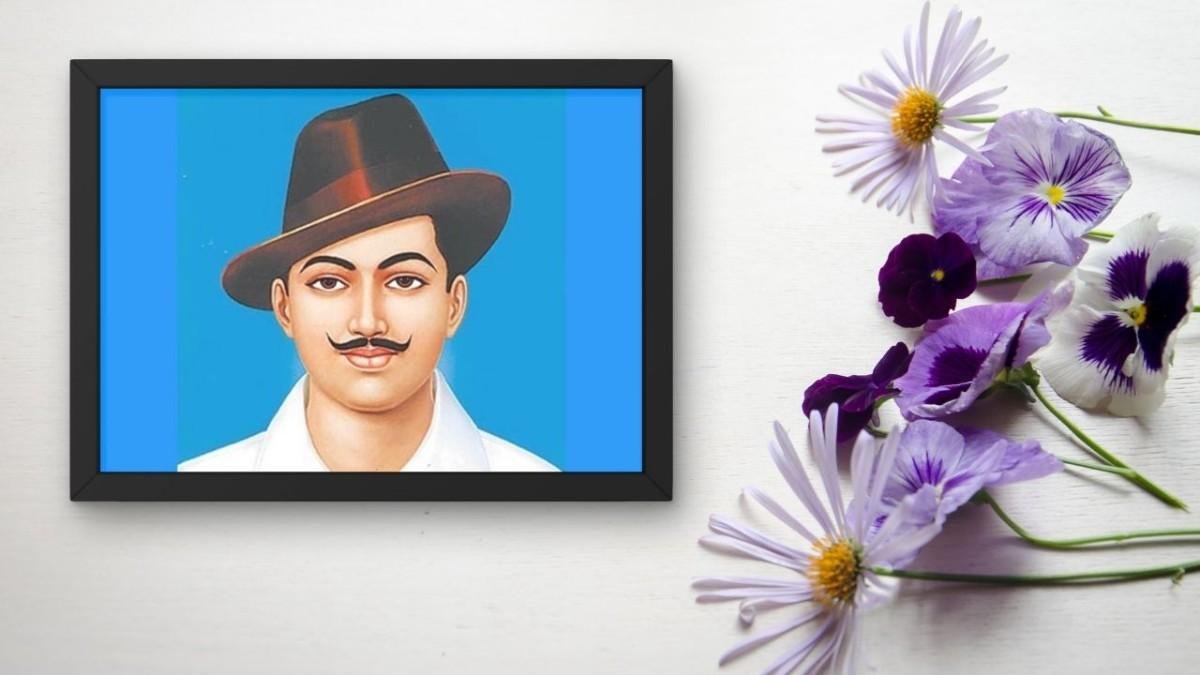
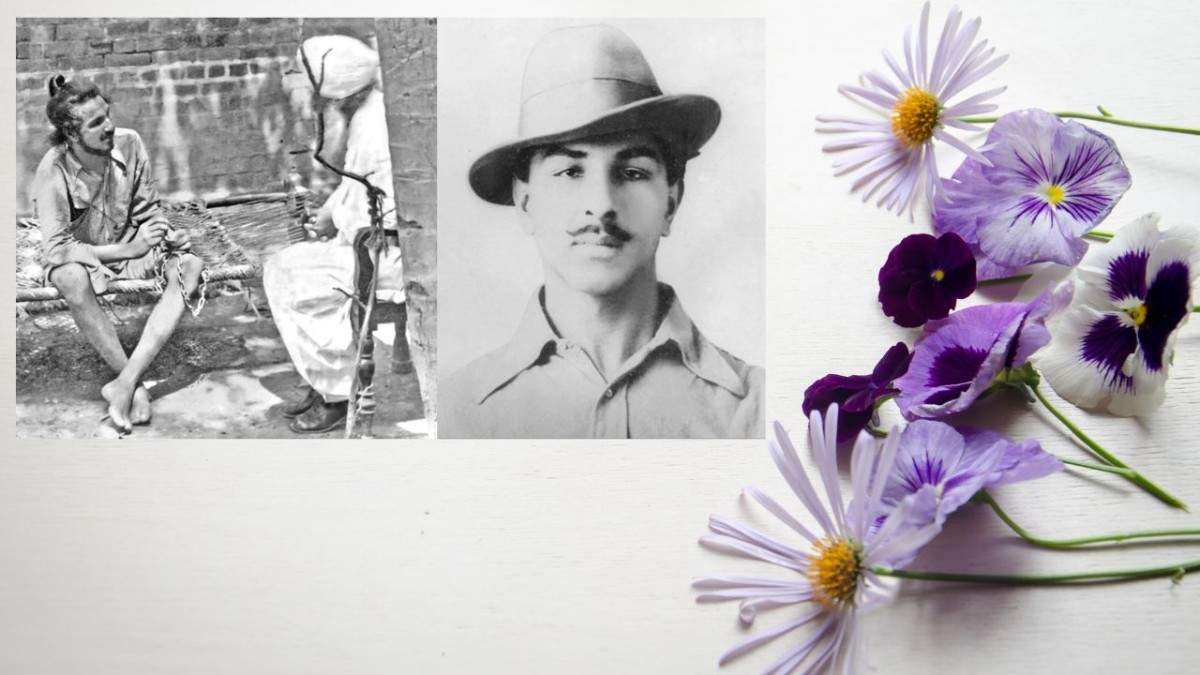
Bhagat Singh story was one of India greatest freedom fighters. He is known for his bravery, strong thinking, and love for the country. His life story continues to inspire people worldwide.
Bhagat Singh Birth and Early Life
Bhagat Singh was born on September 28, 1907, in Banga village, Punjab (now in Pakistan). His family’s patriotic values shaped his early years.
During his childhood (1907–1916), he grew up in an environment filled with stories of freedom and sacrifice. His family members were already involved in fighting against British rule, which influenced his thinking from a young age.
Bhagat Singh Family Background
Bhagat Singh came from a strong nationalist family:
- Father – Kishan Singh (active in the early 1900s): A freedom fighter who supported revolutionary movements
- Mother – Vidyavati (born 1886): A loving and brave woman who encouraged her son’s patriotism
- Uncle – Ajit Singh (1881–1947): A well-known freedom fighter who opposed British policies
- Uncle – Swaran Singh (died 1910): Also involved in the freedom struggle
His family’s involvement in the independence movement deeply shaped his values and courage.
Brothers of Bhagat Singh
- Jagat Singh (1904–1915)
- Jagat Singh was Bhagat Singh’s elder brother. He died at a young age in 1915. His early death had a deep emotional impact on Bhagat Singh during his childhood.
- Kulbir Singh (1912–1983)
- Kulbir Singh was one of Bhagat Singh’s younger brothers. He supported the family and later shared memories of Bhagat Singh’s life.
- Kultar Singh (1916–1995)
- Kultar Singh was the youngest brother. He was very close to Bhagat Singh. Bhagat Singh even wrote an emotional letter to him before his execution in 1931.
- Ranbir Singh (1918–1990)
- Ranbir Singh was another of the younger brothers. He later worked to preserve Bhagat Singh’s legacy and memories.
- Rajinder Singh (dates not widely recorded)
- Rajinder Singh was also part of the family, though less information is available about his life.
Sisters of Bhagat Singh
- Amar Kaur (1905–1995)
- Amar Kaur was Bhagat Singh’s sister, who lived a long life and witnessed India’s independence in 1947.
- Parkash Kaur (dates not widely recorded)
- Parkash Kaur was another sister who was part of the close-knit family.
- Shakuntala Kaur (dates not widely recorded)
- She was the youngest sister and shared a strong bond with Bhagat Singh.
Bhagat Singh Get Married (1920s)
Bhagat Singh did not get married in his lifetime.
During the early 1920s, when he was still young, his family wanted him to get married. At that time, it was customary for families to arrange marriages at a young age.
However, Bhagat Singh refused. He believed that his life belonged to the nation and not to personal happiness.
His Decision to Remain Unmarried (1923)
Around 1923, Bhagat Singh clearly decided not to marry.
It is said that when his family insisted on marriage, he left home and wrote a letter saying that he had dedicated his life to India’s freedom. He chose the path of sacrifice instead of family life.
Education (1916–1919)
Bhagat Singh started his schooling around 1916 at the Dayanand Anglo-Vedic (DAV) School in Lahore.
During this time (1916–1919), he was a bright student and showed great interest in reading. However, he was more attracted to stories of patriotism and freedom than regular school subjects.
Impact of National Events on Education (1919–1921)
In 1919, the Jallianwala Bagh massacre deeply affected Bhagat Singh story.
After this event, he became more serious about India’s independence. Around 1921, he left the DAV School because he did not want to study in institutions controlled by the British government.
National College, Lahore (1923–1925)
In 1923, Bhagat Singh joined the National College in Lahore, which was founded by Lala Lajpat Rai.
During his college years (1923–1925), he actively participated in debates, plays, and discussions related to freedom and politics. This college encouraged patriotic values and independent thinking.
Self-Education and Reading (1923–1928)
Bhagat Singh believed in self-learning. Between 1923 and 1928, he read many books on:
- World history
- Political science
- Revolutionary movements
- Social justice
The ideas of freedom, equality, and socialism influenced him. His strong reading habit made him a deep thinker and a powerful writer.
Languages and Knowledge
Bhagat Singh was skilled in multiple languages, including:
- Punjabi
- Hindi
- Urdu
- English
His knowledge of languages helped him read international books and understand global revolutionary ideas.
Inspiration for Freedom
The tragic Jallianwala Bagh massacre in 1919 changed his life. Seeing innocent people killed by British forces made him determined to fight against injustice. Leaders like Lala Lajpat Rai and Mahatma Gandhi also inspired him.
Joining Revolutionary Activities (1923–1925)
Between 1923 and 1925, Bhagat Singh became more active in revolutionary groups.
He joined the Hindustan Socialist Republican Association (HSRA) and worked with other young revolutionaries. During this time, he spread awareness about freedom and encouraged others to join the movement. Bhagat Singh story
Protest Against British Rule (1928)
In 1928, the death of Lala Lajpat Rai after a police lathi charge shocked the nation.
To take revenge, Bhagat Singh and his companions killed British officer John Saunders in the same year. This act made him a well-known revolutionary.
Central Legislative Assembly Bombing (1929)
In 1929, Bhagat Singh and Batukeshwar Dutt threw bombs in the Central Legislative Assembly.
The bombs were not meant to kill anyone. They were used to protest against British laws and to make their voices heard. After the incident, they shouted “Inquilab Zindabad” and surrendered.
Arrest and Jail Life
Bhagat Singh was one of the bravest revolutionaries in India’s freedom struggle. His arrest and jail life, along with important years, show his courage, sacrifice, and strong fight against injustice. Bhagat Singh story
First Arrest (1927)
Bhagat Singh was first arrested in 1927 by the British government. He was suspected of being involved in revolutionary activities.
However, due to a lack of strong evidence, he was released after some time. This did not stop him from continuing his fight for India’s freedom.
Assembly Bombing and Arrest (1929)
In 1929, Bhagat Singh and Batukeshwar Dutt threw bombs in the Central Legislative Assembly.
The bombs were not meant to harm anyone. They were used as a protest against British laws. After the incident, Bhagat Singh willingly surrendered and was arrested.
This arrest made him famous across India.
Jail Life and Hunger Strike (1929–1930)
During his time in jail from 1929 to 1930, Bhagat Singh protested against the poor treatment of Indian prisoners.
He demanded equal rights, better food, and proper living conditions. To support these demands, he went on a long hunger strike.
His hunger strike gained national attention and inspired many people to support him.
Lahore Conspiracy Case (1930)
In 1930, Bhagat Singh was tried in the Lahore Conspiracy Case for his involvement in revolutionary activities and the killing of a British officer.
The trial became very popular, and many Indians supported him. Bhagat Singh used the court as a platform to spread his ideas about freedom and justice.
Final Days in Jail (1931)
In 1931, Bhagat Singh was sentenced to death.
During his last days in jail, he remained calm and fearless. He continued reading books and writing letters. His courage inspired many people across the country.
He was executed on March 23, 1931, along with his companions Rajguru and Sukhdev.
He was only 23 years old at the time of his death. It is said that he faced his execution with great courage and fearlessness.
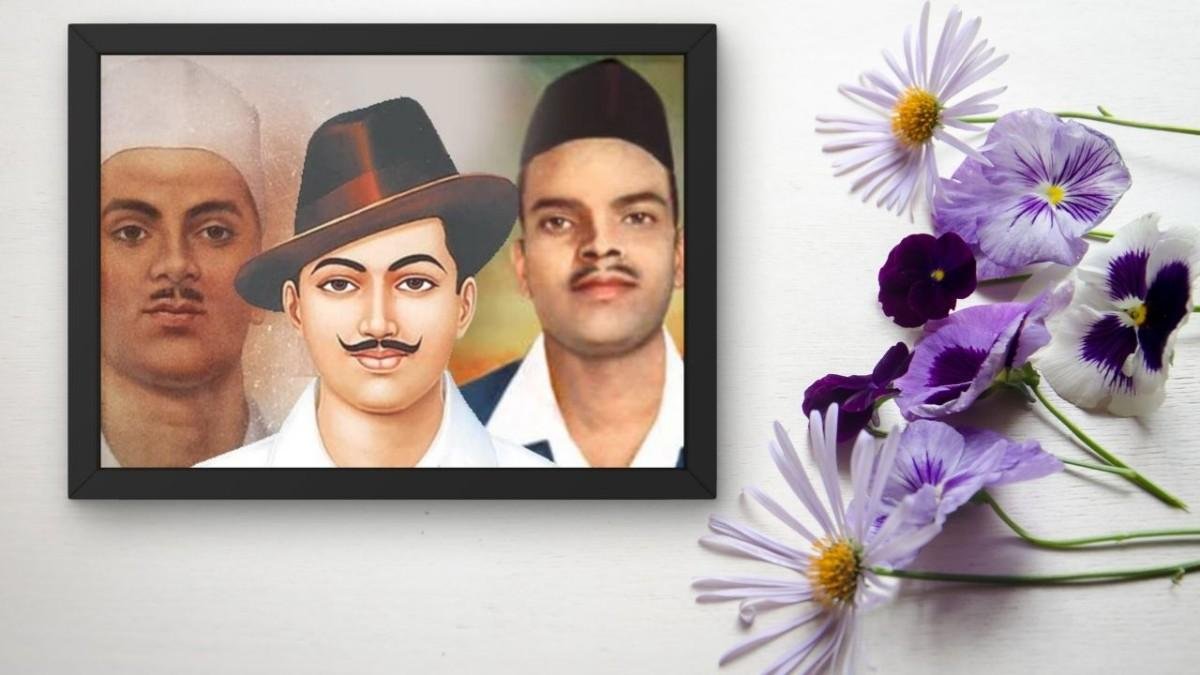
Execution of Bhagat Singh and Gandhi’s Role (1931)
In 1931, Bhagat Singh was sentenced to death. Many people requested Mahatma Gandhi to save Bhagat Singh during talks with the British government. Gandhi raised the issue, but he could not stop the execution. Bhagat Singh story
Public Reaction (1931)
After Bhagat Singh died in 1931, many people were upset and questioned Gandhi’s efforts.
However, both leaders remained important in the freedom struggle, each contributing in their own way.
Legacy
Bhagat Singh is remembered as a symbol of courage and patriotism. His fearless actions inspired many people to join the freedom struggle.
Even today, his life teaches us:
- To love our country
- To fight against injustice
- To stand strong for what is right
Recognition After Death (Post-1931)
After India gained independence in 1947, Bhagat Singh was honored as a national hero.
- He was given the title of “Shaheed” (Martyr)
- His sacrifice became part of Indian history and education.
National Honors and Memorials
- 1968 – Shaheed-e-Azam Bhagat Singh Museum (Punjab): Built to honor his life and contributions
- 2001 – Parliament Tribute (India): His portrait was placed in the Indian Parliament as a mark of respect
- Various Years: Roads, schools, and colleges across India were named after him
These honors show how much the nation respects his sacrifice.
FAQS
1) Many common questions arise about Bhagat Singh’s personal life.
Bhagat Singh did not have any children. He never married because he dedicated his life to India’s freedom struggle. Bhagat Singh believed serving the nation was more important than personal life, so he chose sacrifice over family responsibilities.
2) Who was Bhagat Singh with 2 people?
Bhagat Singh was closely associated with two companions, Shivaram Rajguru and Sukhdev Thapar. They worked together in the freedom struggle and were executed by the British on March 23, 1931, for their revolutionary actions.
3) What is Bhagat Singh’s real name?
Bhagat Singh’s real name was Bhagat Singh. He did not have any other official name. People lovingly called him “Shaheed Bhagat Singh” after his sacrifice, where “Shaheed” means martyr who gave his life for the country’s freedom.
4) What kind of punishment does Bhagat Singh talk about?
Bhagat Singh spoke against the harsh and unfair punishments given by the British rulers. He protested for equal treatment of Indian prisoners and demanded better conditions. He believed punishment should be just, not cruel, and used his hunger strike to highlight injustice.
Read More: