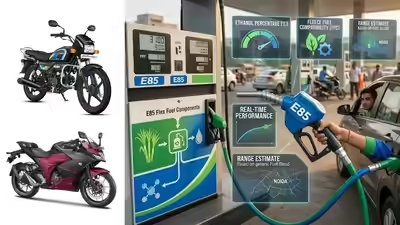
E85 Fuel Story 2026 Benefits, Challenges, and Future Trends E85 fuel has become an important topic in the transportation and energy industry in 2026. Many countries continued to seek cleaner, more sustainable fuel options that could reduce pollution and dependence on traditional gasoline. E85 fuel is one alternative that gained attention in 2026 because it is made primarily from renewable resources. This article explains the E85 fuel story in 2026, including what it is, its benefits, challenges, and the latest trends.
What Is E85 Fuel?
E85 is a fuel blend that contains up to 85% ethanol and 15% gasoline. Ethanol is a type of alcohol that is mainly produced from crops such as corn, sugarcane, and other plant materials. For example, corn-based ethanol is widely used in some fuel markets. E85 is commonly used in Flexible Fuel Vehicles (FFVs), which are designed to run on gasoline, E85, or a blend of the two.
The name “E85” comes from the fuel’s composition. The “E” stands for ethanol, and “85” refers to the percentage of ethanol in the fuel.
Why E85 Fuel Matters in 2026
In 2026, governments and industries continued to focus on reducing greenhouse gas emissions. As concerns about climate change increased in 2026, renewable fuels like E85 became more important.
Many drivers and businesses considered E85 in 2026 because it offers a way to lower dependence on fossil fuels. Ethanol can be produced domestically, supporting local agriculture and energy security.
Benefits of E85 Fuel
1. Renewable Energy Source
One of the biggest advantages of E85 fuel is that it comes from renewable resources. Unlike petroleum, ethanol can be produced every year from crops and plant materials, such as corn and sugarcane.
2. Lower Carbon Emissions
E85 can help reduce greenhouse gas emissions compared to traditional gasoline. For example, when ethanol is blended with gasoline, the overall fuel mix may have a lower environmental impact because the plants used to produce ethanol absorb carbon dioxide during growth.
3. Supports Farmers and Rural Economies
The production of ethanol creates demand for agricultural products. For example, corn and sugarcane growers may benefit from this demand. This can support farmers and provide jobs in rural communities.
4. Higher Octane Rating
E85 generally has a higher octane rating than regular gasoline. For example, some vehicles designed to use it may benefit from better engine performance. Higher octane fuel can improve engine performance in some vehicles designed to use it.
Challenges of E85 Fuel
Limited Availability
Although E85 became more popular in 2026, it was still not available at every fuel station. Drivers in some regions had difficulty finding E85 pumps in 2026.
Lower Fuel Economy
Ethanol contains less energy than gasoline. As a result, vehicles using E85 may travel fewer miles per gallon than those using regular gasoline, for example, on the same long trip.
Vehicle Compatibility
Not all vehicles can use E85 fuel. For example, drivers need a Flexible Fuel Vehicle (FFV) to safely operate on high-ethanol fuel blends.
Production Concerns
Some experts continue to debate the environmental impact of growing crops specifically for fuel production. For example, concerns include land use, water consumption, and agricultural resources.
Major E85 Fuel Trends in 2026
Growing Interest in Renewable Fuels
In 2026, renewable energy remained a global priority. Governments encouraged cleaner fuel options in 2026, helping raise awareness of E85.
Expansion of Ethanol Infrastructure
Many fuel providers worked to expand ethanol fueling stations. For example, adding more E85 pumps in busy travel areas helped improve accessibility for drivers who wanted to use E85.
Advances in Ethanol Production
Researchers continued developing new methods to produce ethanol more efficiently. For example, new technologies focused on using agricultural waste and non-food plant materials to produce cleaner, more sustainable fuel.
Support for Energy Independence
Many countries promoted domestic fuel production to reduce reliance on imported oil. For example, E85 played a role in these efforts because ethanol can be produced locally. E85 Fuel Story 2026 Benefits, Challenges, and Future Trends
The Future of E85 Fuel
The future of E85 fuel looks promising as the world searches for cleaner transportation solutions in 2026 and beyond. While electric vehicles continue to grow in popularity, E85 remains an important option for millions of existing vehicles. Improvements in ethanol production, infrastructure, and vehicle technology could further increase its adoption in the coming years.
Conclusion
The E85 fuel story in 2026 highlights the growing importance of renewable energy in transportation. E85 offers several benefits in 2026, including lower emissions, support for agriculture, and reduced dependence on fossil fuels. However, challenges such as limited availability and lower fuel economy still exist in 2026. As technology continues to improve, E85 fuel may play an even greater role in creating a cleaner, more sustainable future for transportation.
Read More: