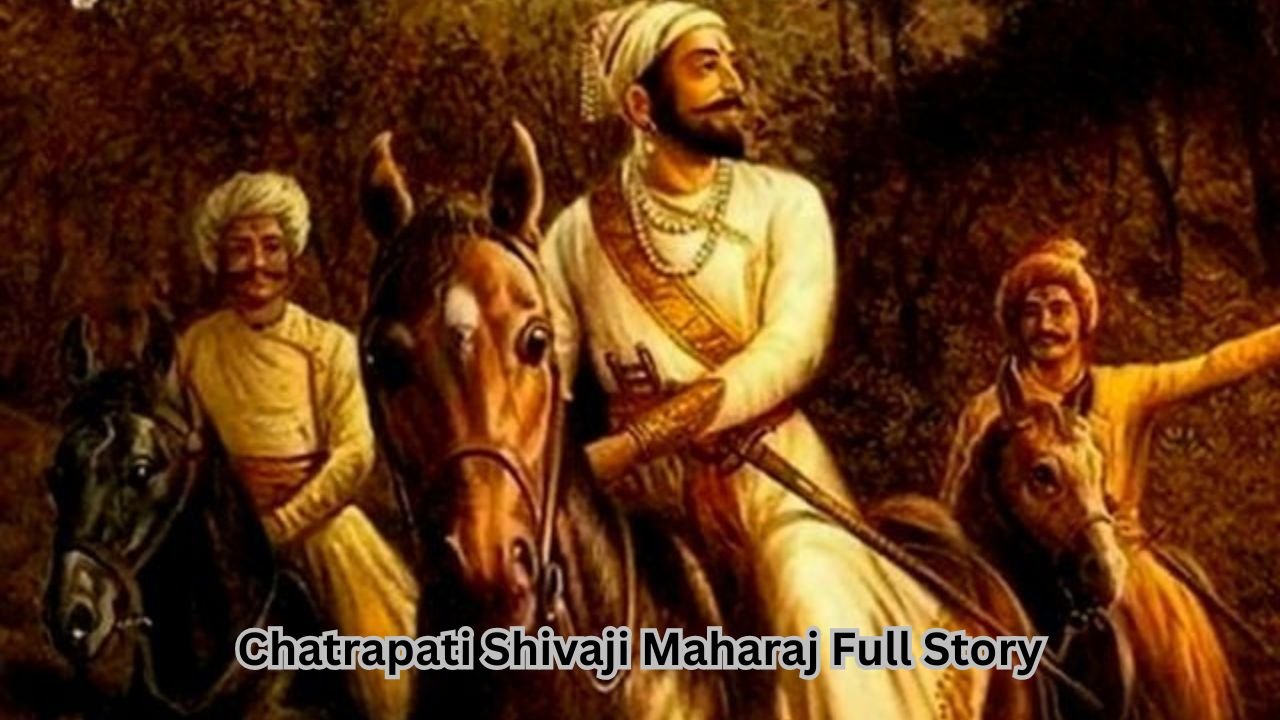
Chatrapati Shivaji Maharaj Full Story was one of the greatest kings in Indian history. He is known for his bravery, intelligence, and strong leadership. He founded the Maratha Empire and worked hard to establish self-rule (Swarajya) in India.
Early Life of Shivaji Maharaj
Shivaji Maharaj was born on February at Shivneri Fort in Maharashtra. His father, Shahaji Bhosale, was a skilled warrior, and his mother, Jijabai, was a wise and strong woman.
Jijabai raised Shivaji with great values. She told him stories of heroes and taught him about courage, truth, and justice. These teachings helped him become a great leader.
Marriages of Shivaji Maharaj
Shivaji Maharaj had multiple marriages, which was common among kings at the time. These marriages helped him form strong relationships with different noble families.
- Saibai Nimbalkar (Marriage: 1640)
Saibai Nimbalkar was Shivaji Maharaj’s first and most loved wife. They were married in 1640. She was kind and supportive.
She gave birth to his eldest son, Sambhaji Maharaj, in 1657. Saibai died in 1659, a great loss to Shivaji.
- Soyarabai Mohite (Marriage: around 1650)
Soyarabai married Shivaji around 1650. She was from the Mohite family.
She gave birth to Rajaram Maharaj in 1670, who later became king after Sambhaji.
- Putalabai (Marriage: mid-1600s)
Putalabai was another of Shivaji Maharaj’s wives. She had no children.
After Shivaji died in 1680, she performed sati, which shows her deep devotion. Chatrapati Shivaji Maharaj Full Story
- Sakvarbai (Marriage: mid-1600s)
Sakvarbai was also one of his wives. Historical records about her life are limited.
- Kashibai (Marriage: mid-1600s)
Kashibai was another queen. Not much detailed information is available about her.
Children of Shivaji Maharaj
- Sambhaji Maharaj (Born: 1657)
Sambhaji Maharaj was the eldest son of Shivaji Maharaj and Saibai.
He became the king after Shivaji died in 1680. Sambhaji was known for his bravery and strong resistance against the Mughals.
- Rajaram Maharaj (Born: 1670)
Rajaram Maharaj was the younger son of Shivaji Maharaj and Soyarabai.
After Sambhaji died in 1689, Rajaram became the king and continued the fight to protect the Maratha Empire.
- Daughters of Shivaji Maharaj
Chatrapati Shivaji Maharaj Full Story also had daughters, including:
- Sakhubai
- Ranubai
- Ambikabai
These daughters were married into royal families to strengthen alliances. The exact years of their births are not clearly recorded.
Early Childhood Learning (1630–1640)
Shivaji Maharaj was born in 1630 at Shivneri Fort. During his early years, his mother, Jijabai, played a key role in his education.
She taught him moral values, religion, and stories of great heroes from the Indian epics, such as the Ramayana and the Mahabharata. These lessons helped build his strong character and sense of justice.
Training Under Dadoji Konddev (1640–1647)
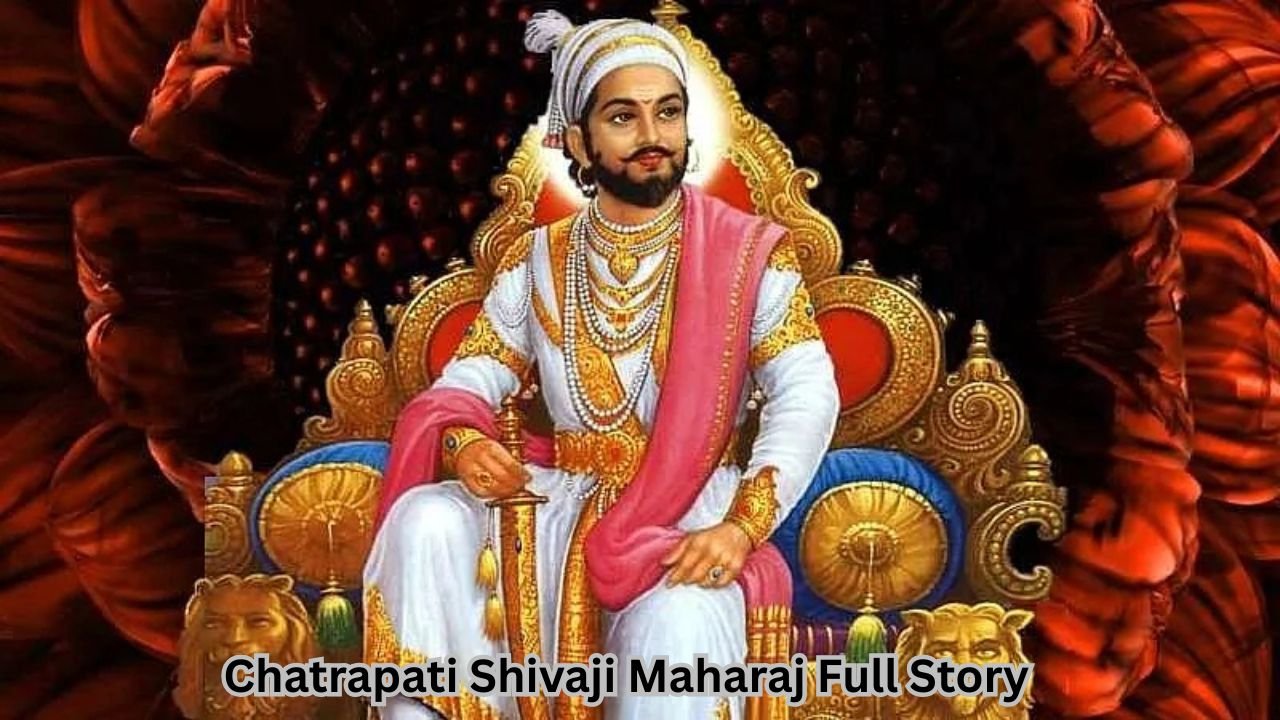
Shivaji’s formal training began under Dadoji Konddev, who was appointed by his father, Shahaji Bhosale.
During this period, Shivaji learned:
- Horse riding
- Sword fighting
- Archery
- Fort management
- Basic administration
This training helped him become physically strong and mentally sharp.
Learning Military Skills (1645–1655)
Between 1645 and 1655, Shivaji began applying his knowledge in practice. He began capturing forts and organizing his army.
He learned:
- Guerrilla warfare techniques
- Use of mountains and forests in battles
- Leadership and decision-making
His practical experience made him a skilled military strategist.
Knowledge of Languages and Politics
Shivaji Maharaj was educated in languages like:
- Marathi
- Sanskrit
- Persian (basic understanding)
He also learned about politics, diplomacy, and governance. This helped him deal with powerful empires like the Mughals and the Deccan Sultanates.
Religious and Ethical Education
Saints and spiritual teachings deeply influenced Shivaji Maharaj. He believed in respecting all religions and protecting his people.
His education included:
- Dharma (righteousness)
- Respect for women
- Justice and fairness
- Religious tolerance
These values made him a loved and respected ruler.
Lifelong Learning and Leadership (1655–1680)
From 1655 until he died in 1680, Shivaji continued learning from experience. Every battle, challenge, and success added to his knowledge.
He improved his administration, strengthened his army, and built a powerful empire through continuous learning.
Dream of Swarajya
Swarajya means a kingdom ruled by its own people, not by foreign powers. Shivaji Maharaj wanted to protect his land, culture, and people from injustice. His dream was to build a fair and strong kingdom. Chatrapati Shivaji Maharaj Full Story
Early Inspiration (1630–1645)
Shivaji Maharaj was born in 1630. From childhood, his mother, Jijabai, inspired him with stories of great warriors and kings.
These stories gave him the idea of Swarajya and the courage to fight for it.
First Steps Toward Swarajya (1645–1647)
Around 1645, Shivaji began taking action. At just 15 years old, he gathered loyal friends and soldiers.
In 1646, he captured Torna Fort, his first major victory. This marked the beginning of Swarajya.
Expansion of Swarajya (1647–1665)
Between 1647 and 1665, Shivaji Maharaj captured many forts and expanded his territory. He used smart strategies, such as guerrilla warfare.
He fought against powerful rulers and slowly built a strong foundation for his kingdom.
Struggles and Challenges (1665–1670)
During this time, Shivaji faced many difficulties, especially from the Mughal Empire.
In 1665, he signed the Treaty of Purandar. In 1666, he was kept under house arrest in Agra by Aurangzeb.
But Shivaji escaped bravely and continued his mission of Swarajya.
Success of Swarajya (1670–1674)
After escaping, Shivaji regained control of the lost forts and strengthened his power.
In 1674, he was crowned king at Raigad Fort and given the title “Chhatrapati.” This was the official success of his dream of Swarajya.
Swarajya After Shivaji (1680 and Beyond)
Shivaji Maharaj died in 1680, but his dream did not end. His sons, like Sambhaji Maharaj, continued to protect and expand the Maratha Empire.
Swarajya became a symbol of freedom and inspired future generations.
Military Skills and Guerrilla Warfare
Guerrilla warfare is a form of warfare in which small groups of soldiers attack quickly and then hide. It uses speed, surprise, and knowledge of the land.
Shivaji Maharaj used mountains, forests, and forts to confuse and defeat enemy armies.
Early Military Training (1640–1647)
Shivaji Maharaj received military training under Dadoji Konddev.
During this time, he learned:
- Sword fighting
- Horse riding
- Archery
- Fort defense
By 1645, he started planning his first military actions.
First Victories and Fort Strategy (1646–1655)
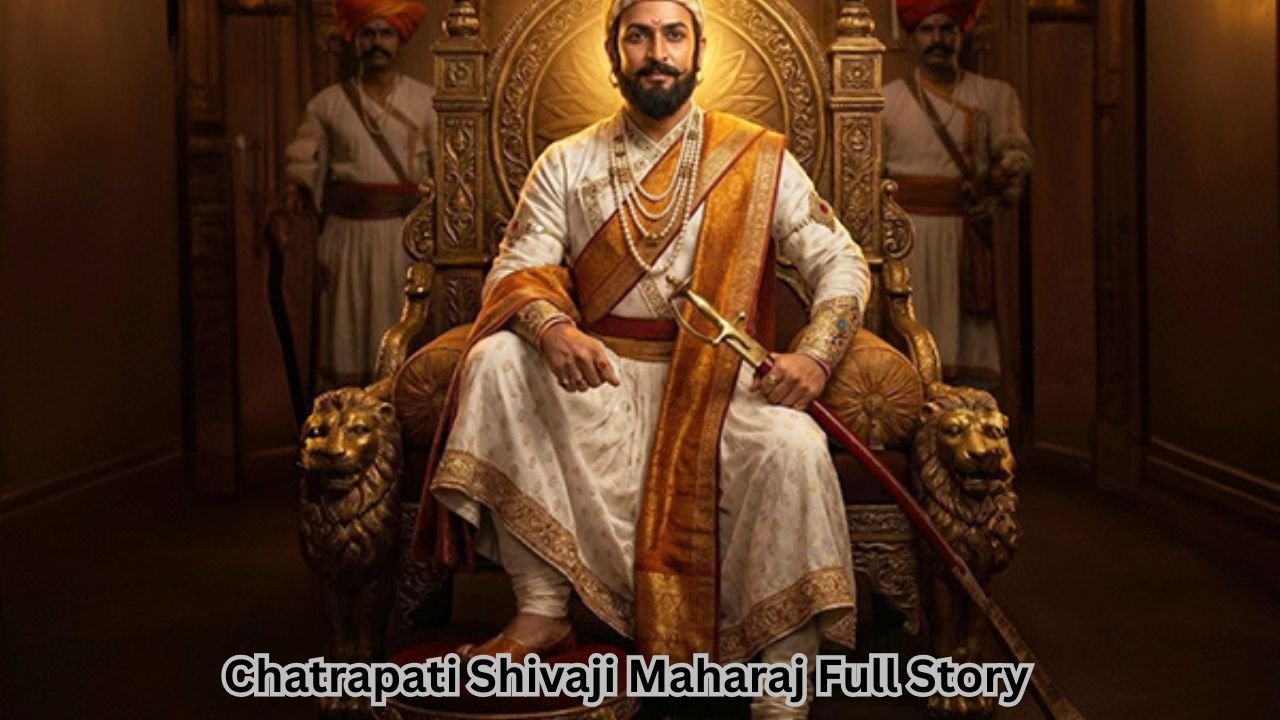
In 1646, Shivaji captured Torna Fort, his first major success.
Between 1647 and 1655, he captured many forts like Rajgad and Kondana. These forts became the backbone of his military power.
He focused on:
- Building and protecting forts
- Using hills for defence
- Quick attacks on enemies
Guerrilla Warfare in Action (1655–1665)
Between 1655 and 1665, Shivaji Maharaj mastered guerrilla warfare.
One famous event was his encounter with Afzal Khan in 1659. Shivaji used smart planning and surprise tactics to defeat him.
His strategies included:
- Night attacks
- Sudden ambushes
- Fast movement of troops
- Avoiding direct large battles
Conflict with the Mughals (1665–1670)
Shivaji faced strong opposition from the Mughal Empire.
In 1665, he signed the Treaty of Purandar. In 1666, he was captured in Agra by Aurangzeb.
However, Shivaji escaped cleverly and returned stronger. He again used guerrilla tactics to regain the forts he had lost.
Peak Military Power (1670–1674)
Between 1670 and 1674, Shivaji Maharaj reached the peak of his military strength.
He recaptured many forts and expanded his kingdom. His army became well-organized and disciplined.
In 1674, he was crowned as Chhatrapati at Raigad Fort.
Coronation and Maratha Empire
In 1674, Shivaji Maharaj was crowned king at Raigad Fort. He received the title “Chhatrapati”, meaning supreme ruler.
This event officially marked the beginning of the Maratha Empire. Under his rule, the empire grew strong and well-organized.
Administration and Leadership
Shivaji Maharaj showed leadership skills from a young age.
Between 1645 and 1655, he started capturing forts and managing small regions. During this time, he learned:
- How to lead soldiers
- How to manage resources
- How to protect people
His early leadership laid the foundation for a strong administration.
Formation of Administrative System (1655–1674)
Between 1655 and 1674, Shivaji developed a well-structured system of governance. He focused on discipline, justice, and efficiency.
He divided his kingdom into provinces and appointed skilled officers to manage them. Each officer had clear duties and responsibilities.
Ashta Pradhan Council (1674)
In 1674, after his coronation, Shivaji Maharaj established a council of eight ministers, the Ashta Pradhan.
Key members included:
- Peshwa (Prime Minister) – handled general administration
- Amatya – managed finance
- Sachiv – handled official documents
- Senapati – commanded the army
- Panditrao – managed religious matters
This system helped in smooth governance and decision-making.
Revenue and Tax System (1660–1680)
Shivaji Maharaj introduced a fair tax system to help farmers and the economy.
Between 1660 and 1680, he focused on:
- Collecting taxes directly from farmers
- Reducing exploitation by middlemen
- Ensuring fair land measurement
His policies improved agriculture and increased state income.
Justice and Law (1655–1680)
Shivaji Maharaj believed in justice and equality.
From 1655 to 1680, he ensured:
- Quick and fair justice
- Strict punishment for crimes
- Protection of women and civilians
He treated all religions with respect and maintained peace in his kingdom.
Military Administration (1660–1680)
Shivaji created a strong and disciplined army.
Between 1660 and 1680, he:
- Paid soldiers regularly
- Maintained strict discipline
- Built a strong navy to protect the coast
His military administration made his empire secure and powerful.
Death of Shivaji Maharaj (1680)
Shivaji Maharaj died on April 3, 1680. His death was a great loss to the Maratha Empire.
Historians believe that he died due to illness, possibly fever or dysentery. At the time of his death, he was around 50 years old.
Place of Death – Raigad Fort
Shivaji Maharaj passed away at Raigad Fort in present-day Maharashtra. Raigad was the capital of his empire and an important administrative center.
It was also the place where he was crowned as Chhatrapati in 1674. Today, Raigad Fort is a famous historical site and a symbol of its glory. Chatrapati Shivaji Maharaj Full Story
Immediate Aftermath (1680–1689)
After Shivaji died in 1680, his eldest son Sambhaji Maharaj became the king.
Sambhaji continued his father’s mission and fought against the Mughal Empire. However, he was captured and executed by Aurangzeb in 1689.
Continuation of Legacy (1689–1707)
After Sambhaji’s death, Shivaji’s younger son Rajaram Maharaj took leadership.
From 1689 to 1707, the Marathas continued fighting and protecting their kingdom. Even in difficult times, Shivaji’s ideas of Swarajya kept them strong.
FAQS
1) Does Chhatrapati Shivaji’s family still exist?
Yes, the family of Chhatrapati Shivaji Maharaj still exists today. His descendants, from branches of Sambhaji Maharaj and Rajaram Maharaj, live in India, especially in Maharashtra, and some still hold honorary royal titles.
2) Who are the 8 wives of Shivaji?
Chhatrapati Shivaji Maharaj had eight wives: Saibai Nimbalkar, Soyarabai, Putalabai, Sakvarbai, Kashibai, Sagunabai, Lakshmibai, and Gunwantabai. These marriages helped form alliances and strengthen his political position.
3) Why did Shivaji die so early?
Chhatrapati Shivaji Maharaj died in 1680 at about 50 due to illness, likely fever or dysentery. Medical care was limited then, so even common diseases could become serious and life-threatening, leading to his relatively early death.
4) Is Shivaji veg or non-veg?
Chhatrapati Shivaji Maharaj is generally believed to have eaten a simple diet that included both vegetarian and non-vegetarian food. As a warrior king, his meals were practical and based on availability, tradition, and the needs of his military lifestyle.
5) Shivaji Maharaj’s favourite god?
Chhatrapati Shivaji Maharaj deeply revered Goddess Bhavani (Tulja Bhavani) as his favourite deity. He believed she blessed him with strength and success. He also respected Lord Shiva and other Hindu gods, showing strong devotion and religious tolerance.
6) Shivaji Maharaj’s slogan
Chhatrapati Shivaji Maharaj is associated with powerful slogans like “Har Har Mahadev” and “Swarajya is my birthright.” These reflect his courage, devotion, and vision for self-rule, inspiring people to fight for freedom, justice, and dignity.
Read More