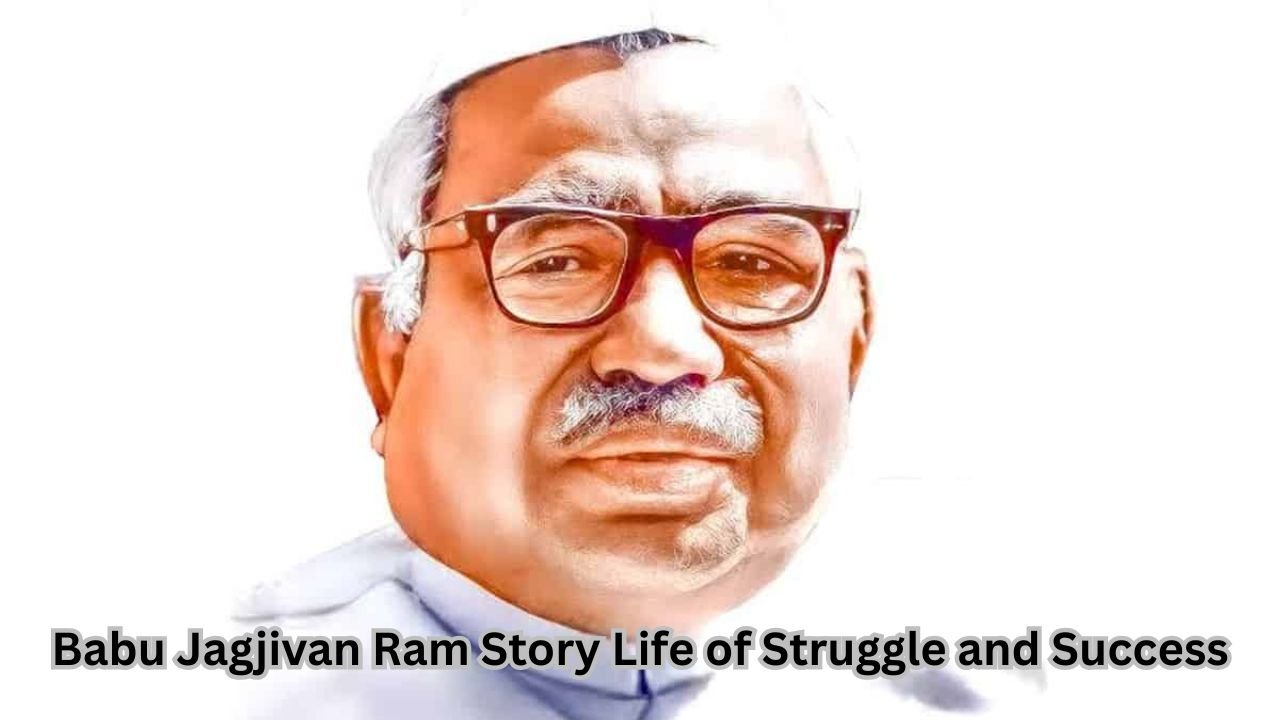
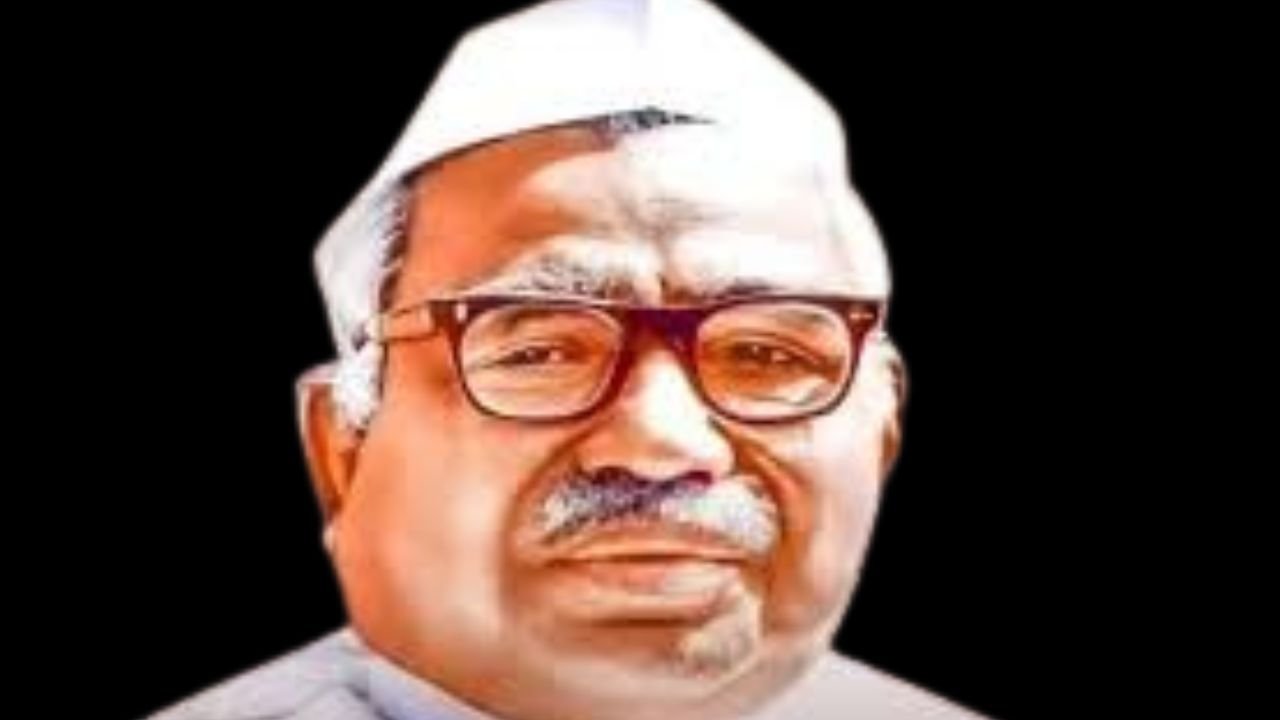
Babu Jagjivan Ram Story Life of Struggle and Success. He was a great leader of India. He worked for equality, justice, and the upliftment of poor people. His life story is full of courage and inspiration.
Babu Jagjivan Ram Early Life
Babu Jagjivan Ram was born on April 5, 1908, in Bihar. He came from a simple and low-income family. From childhood, he faced caste discrimination.
Even in school, he was treated differently. But he stayed strong and focused on his studies. He believed that education could change his life.
Family Background
- Father: Shobhi Ram (a religious and respected person)
- Mother: Vasanti Devi (a caring and strong woman)
His parents raised him with strong moral values, which shaped his future.
Marriage Life (1935)
Babu Jagjivan Ram got married to Indrani Devi in 1935.
- Indrani Devi was educated and supportive
- She stood with him during his political journey
- She managed family responsibilities while he served the nation
Their marriage was based on respect, trust, and understanding.
Children Names
Babu Jagjivan Ram and Indrani Devi had children, including:
- Meira Kumar (Born 1945)
-
- She became a successful politician
-
- She served as the first woman Speaker of Lok Sabha (2009–2014)
- Suresh Kumar (Born around 1940s, exact year not widely recorded)
-
- He stayed mostly away from politics
-
- Lived a private life
Education
Babu Jagjivan Ram started his schooling around 1915 in Bihar.
- He was a bright and hardworking student
- He faced caste discrimination in school
- He was not allowed to share water with other students
Despite these problems, he continued his studies with determination.
High School Education (1922–1925)
Between 1922 and 1925, he completed his high school education.
- He performed very well in academics
- He developed confidence and leadership skills
- He started speaking against social injustice
His strong mindset helped him move forward.
College at Banaras Hindu University (1925–1926)
In 1925, Jagjivan Ram joined Banaras Hindu University.
- He faced caste discrimination again
- He protested against unfair practices
- He inspired other students to stand for equality
Due to these issues, he later left the university. Babu Jagjivan Ram Story Life of Struggle and Success
Studies at the University of Calcutta (1926–1931)
After leaving BHU, he joined the University of Calcutta in 1926.
- He continued his higher education successfully
- He became active in social and political activities
- He raised his voice for equality and justice
He completed his graduation around 1931.
Role in Freedom Struggle
Between 1930 and 1935, Jagjivan Ram became active in social and political activities.
- He started raising his voice against caste discrimination
- He supported movements led by Mahatma Gandhi
- He encouraged people from weaker sections to join the freedom struggle
These years helped him become a strong young leader.
Joining the Indian National Congress (1935)
In 1935, he joined the Indian National Congress.
- He became an active member of the party
- He worked closely with national leaders
- He focused on both freedom and social equality
His leadership skills started gaining recognition.
Role in Dalit Upliftment (Late 1930s)
During the late 1930s, Jagjivan Ram worked for the upliftment of Dalits.
- He organized people from the backward communities
- He spread awareness about equal rights
- He connected social reform with the freedom movement
He believed freedom should bring equality for all. Babu Jagjivan Ram Story Life of Struggle and Success
Participation in the Quit India Movement (1942)
In 1942, he took part in the famous Quit India Movement.
- He supported protests against British rule
- He encouraged people to demand complete independence
- He faced challenges and risks for his participation
This movement was a turning point in India’s freedom struggle.
Role Before Independence (1946–1947)
Between 1946 and 1947, Jagjivan Ram became a key national leader.
- He was part of important political discussions
- He worked for the rights of workers and poor people
- He supported the final steps toward independence
India finally gained freedom in 1947, and its contributions were widely respected.
Babu Jagjivan Ram Political Career
In 1946, Jagjivan Ram became a member of the Interim Government of India.
- He was appointed as the Labour Minister
- He worked to improve the condition of workers
- He supported fair wages and better working conditions
This was the beginning of his long political journey.
Role After Independence (1947–1952)
After India gained independence in 1947, he continued as a central leader.
- He played a key role in building a new India
- He worked on labour laws and welfare policies
- He became a trusted leader in the government
Growth as Senior Leader (1952–1963)
Between 1952 and 1963, Jagjivan Ram held several important positions.
- He was elected to Parliament many times
- He handled ministries like Communications and Transport
- He worked to improve public services and infrastructure
His experience made him one of the top leaders in India.
Key Ministerial Roles (1963–1970)
From 1963 to 1970, he served in major ministries.
- He became Minister of Food and Agriculture
- He helped India deal with food shortages
- He supported farmers and agricultural growth
His policies helped improve food production in the country.
Defence Minister and the 1971 War (1970–1974)
In 1970, Jagjivan Ram became the Defence Minister of India.
- He played an important role during the Indo-Pak War of 1971
- India achieved a major victory under his leadership
- His role increased his popularity and respect
Later Political Career (1974–1980)
Between 1974 and 1980, he continued to be an important leader.
- He served in different ministries
- In 1977, he became the Deputy Prime Minister of India
- He worked for political stability and development
Death of Babu Jagjivan Ram (1986)
Babu Jagjivan Ram passed away on July 6, 1986.
- He died after years of dedicated public service
- His death was a great loss for the nation
- Many leaders and citizens paid tribute to him
He is remembered as one of India’s most respected leaders.
Place of Death
Babu Jagjivan Ram died in New Delhi, the capital of India.
- New Delhi was the center of his political life
- He spent many years serving the country from there
Legacy (1986 – Present)
After he died in 1986, his legacy continued to grow.
- He is remembered as a champion of equality and social justice
- His work for Dalits and the weaker sections is still respected
- His policies helped improve the lives of workers and farmers
Honors and Recognition (After 1986)
Even after his death, Babu Jagjivan Ram has been honored in many ways.
- His birth anniversary (April 5) is celebrated every year
- Many institutions, roads, and programs are named after him
- People remember his contributions to the nation
Influence on Future Generations
His values continue to guide people even today.
- His daughter Meira Kumar carried forward his legacy
- Many leaders are inspired by his life and work
- His story teaches the importance of equality and hard work
FAQS
1) What is Babu Jagjivan Ram famous for?
Babu Jagjivan Ram is famous for his role in India’s freedom struggle, his fight against caste discrimination, and his long political career. He worked for social justice, Dalit upliftment, and served as a senior leader in independent India’s government.
2) Who is Babu Jagat Jeevan?
Babu Jagjivan Ram was an Indian freedom fighter and senior political leader. He worked for equality and social justice, fought against caste discrimination, and served in key government roles, becoming one of the most respected leaders in independent India.
3) What is the caste of Babu Jagjivan Ram?
Babu Jagjivan Ram was born into a Dalit community, specifically the Chamar caste. He faced discrimination from childhood but rose to become a powerful leader, working for equality, social justice, and the upliftment of marginalized sections in India.
4) Who was the first minister of India?
Jawaharlal Nehru was the first Prime Minister of India. He took office on August 15, 1947, after India’s independence. Nehru played a key role in shaping modern India and served as Prime Minister until he died in 1964.
5) Where is the last name Babu from?
The name “Babu” is commonly used in India and comes from the Hindi and Bengali languages. It originally meant “gentleman” or “educated man.” Over time, it became a title of respect and later a surname in some communities.
Read More: