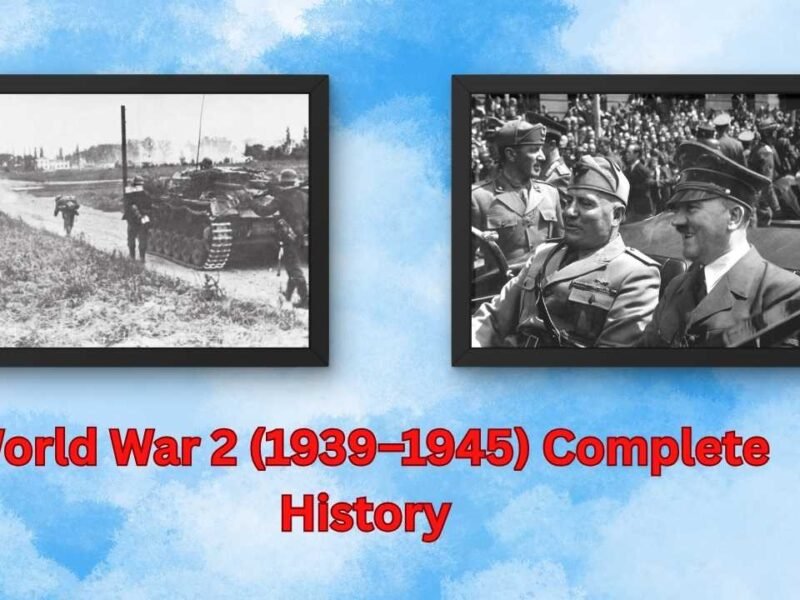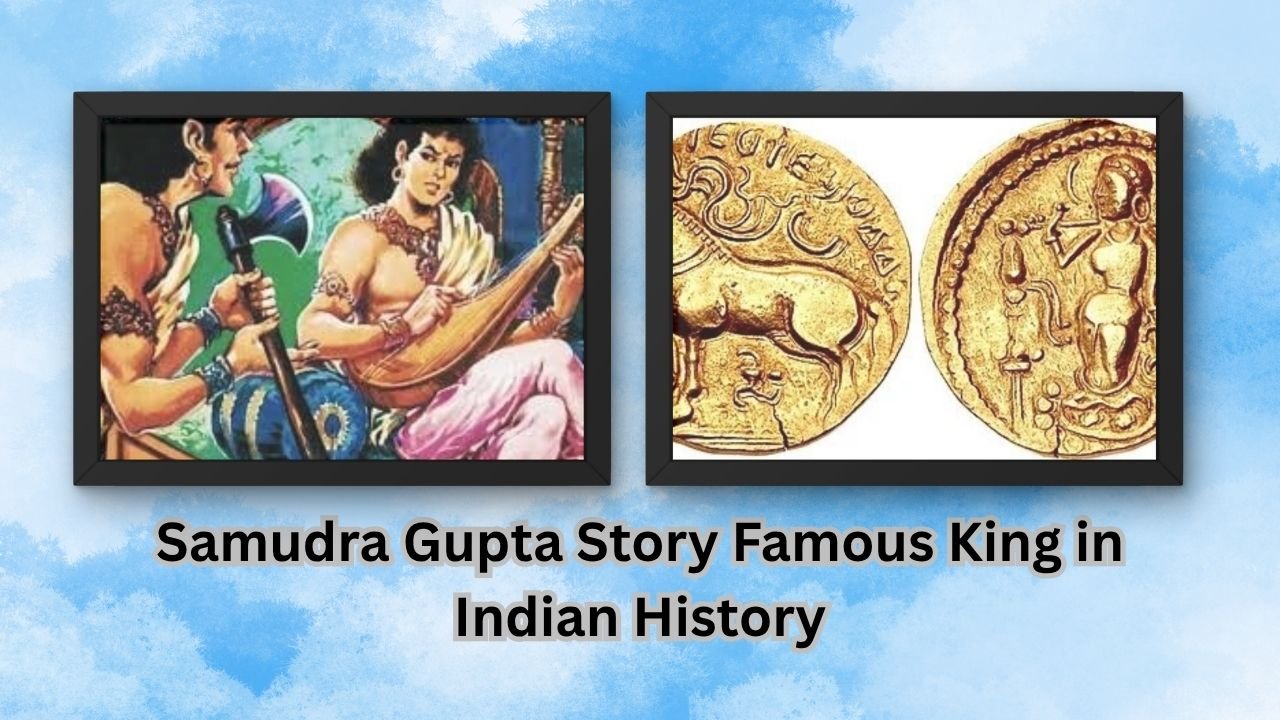
Samudra Gupta Story Famous King in Indian History Samudragupta stands tall as one of the most dynamic and successful rulers in ancient Indian history. Commanding the Gupta Empire, he dazzled with his military prowess, wise governance, and passion for art and culture. His remarkable feats in war earned him the title “Napoleon of India.” His reign ushered in a dazzling chapter in Indian history known as the Golden Age.
Early Life of Samudra Gupta (c. 335 CE)
Samudra Gupta, born around 335 CE into a powerful royal dynasty, emerged early as a figure of intelligence, courage, and leadership. Palace life thrust him into the complexities of politics, warfare, and administration from the very beginning.
Through careful training, he was prepared for kingship and future responsibilities. These formative years were crucial to his development into a remarkable emperor.
Parents of Samudra Gupta
Samudra Gupta was the son of Chandragupta I, the founder of the Gupta Empire, and Queen Kumaradevi.
While his father built a solid foundation for the empire, his mother hailed from the respected Lichchhavi family. This blend of backgrounds granted Samudra Gupta substantial authority and respect, even before ascending the throne.
Education, Training, and Languages
Samudra Gupta received a rich and complete royal education. He was trained in many important areas, such as:
- Military strategies and warfare techniques
- Administration and governance
- Literature, poetry, and music
Not only was he a warrior, but he also excelled as a scholar. This love for music and poetry earned him the title Kaviraja, or “King of Poets.”
Languages
During his time, Sanskrit was the main language used for administration, literature, and inscriptions. Samudra Gupta was highly skilled in Sanskrit, which helped him promote culture and knowledge across the empire.
After establishing his intellectual and cultural strengths, Samudra Gupta married Queen Dattadevi.
They had children, including Chandragupta II, who later became one of the greatest rulers of the Gupta dynasty. His family continued his legacy and expanded the empire even further.
Rise to Power (c. 335 CE)
Upon the passing of Chandragupta I, Samudra Gupta ascended to the throne around 335 CE.
Although rivals may have eyed the throne, Samudra Gupta prevailed thanks to his unshakable resolve, boldness, and visionary leadership. His ascent marked the beginning of an electrifying new era for the Gupta Empire.
Military Campaigns and Expansion (c. 340–375 CE)
Best remembered for his military conquests, Samudra Gupta’s victories are documented in the Allahabad Pillar Inscription, which provides detailed accounts of his campaigns. Samudra Gupta Story Famous King in Indian History
Northern Campaigns
In North India, he defeated several kings and brought their territories directly under his control, strengthening the empire with each victory.
Southern Campaigns
Leading campaigns into South India, Samudra Gupta defeated many southern rulers. Rather than direct rule, he allowed them to govern their own kingdoms if they recognized him as overlord, demonstrating strategic intelligence in maintaining control.
Border Kingdoms and Tribal States
By accepting his sovereignty and offering tribute, many border kingdoms and tribal regions came under his influence, further expanding the empire’s reach. Samudra Gupta Story Famous King in Indian History
How Many Battles Did He Fight?
Historical accounts ring with Samudra Gupta’s victories, as he bested more than 20 rulers across his campaigns. His unmatched skill on the battlefield cemented his place as a legendary commander.
Administration and Governance
Samudra Gupta was not only a great warrior but also an excellent administrator. His governance system was well-organized and effective.
- He maintained peace and law throughout the empire.
- He allowed local rulers to manage their regions under his authority.
- He encouraged trade, agriculture, and economic development.
His balanced approach helped stabilize and prosper the empire.
Religion and Culture
Though Samudra Gupta was devoted to Hinduism and worshipped Lord Vishnu, he gained distinction for his remarkable religious tolerance and genuine respect for all faiths.
He supported:
- Scholars and poets
- Religious institutions
- Art, music, and culture
His reign became a beacon, lighting the path for India’s spectacular rise. The era is hailed as India’s Golden Age a time when art, literature, and science soared to dazzling heights. Samudra Gupta Story Famous King in Indian History
Achievements of Samudra Gupta
Samudra Gupta achieved many great things during his reign:
- Expanded the Gupta Empire across large parts of India
- Won numerous battles and became a legendary conqueror
- Promoted education, literature, and the arts
- Issued gold coins that displayed his power and achievements
- Strengthened political unity in India
- Earned the title “Napoleon of India.”
Histrailblazing achievements ensured Samudra Gupta remains celebrated as one of Indian history’s most revered kings.y.
Death of Samudra Gupta (c. 375 CE)
After nearly 40 years on the throne, Samudra Gupta passed away around 375 CE.
- Death Place: Not clearly known
- Age at Death: Around 40 years (approximate)
After his death, his son Chandragupta II became the ruler and continued his father’s legacy.
Legacy
Samudra Gupta left behind a powerful and united empire. His contributions helped shape India’s future.
His reign is remembered for:
- Strong political leadership
- Military success
- Cultural development
- Economic growth
Even today, Samudra Gupta is hailed as a titan among ancient India’s rulers, his name echoing through the ages. Samudra Gupta Story Famous King in Indian History
Conclusion
The life story of Samudra Gupta is a powerful example of courage, intelligence, and leadership. From his early life to his rise to greatness as an emperor, he demonstrated excellence in both war and governance. His achievements made the Gupta Empire one of the greatest empires in Indian history, and his legacy continues to inspire people even today.
FAQs
1) Who was Samudra Gupta?
Samudra Gupta was a powerful ruler of the Gupta Empire who ruled from 335 CE to 375 CE.
2) Why is Samudra Gupta called the Napoleon of India?
He is known as the Napoleon of India for his great military skills and successful conquests.
3) How many battles did Samudra Gupta fight?
He defeated more than 20 kings in different battles across India.
4) What is the Allahabad Pillar Inscription?
It is a historical record that documents Samudra Gupta’s achievements and victories.
5) Who succeeded Samudra Gupta?
His son Chandragupta II became king after him.
Read More: