Narasimhagupta Life Story and Indian History Explained Narasimhagupta was one of the important rulers of the later Gupta Empire in ancient India. He is also known as Narasimhagupta Baladitya. He ruled during the 5th century CE, when the Gupta Empire faced numerous challenges, including foreign invasions and political instability. Even during difficult times, Narasimhagupta protected Indian culture, Buddhism, and the traditions of the Gupta dynasty.
Known for his kindness and support for religion, Narasimhagupta is remembered in Indian history as a leader who resisted the Hun invasions.
Early Life of Narasimhagupta
Born around 470 CE into the powerful Gupta royal family, Narasimhagupta was the son of Purugupta, a previous ruler of the Gupta Empire. From an early age, he was positioned to inherit his family’s legacy.
During his childhood, Narasimhagupta received education in:
- Sanskrit language
- Politics and administration
- Military training
- Religion and philosophy
Like many Gupta princes, Narasimhagupta began learning the responsibilities of ruling a kingdom early, preparing him for future leadership.
Parents of Narasimhagupta
Father
His father was Purugupta, a ruler of the Gupta dynasty who controlled parts of northern India after the death of Skandagupta.
Mother
Although the exact name of Narasimhagupta’s mother is not clearly mentioned in historical records, historians believe she belonged to a respected royal family. Narasimhagupta Life Story and Indian History Explained
Education and Training
Narasimhagupta was highly educated. The Gupta period was famous for learning, science, literature, and art. He studied:
- Hindu scriptures
- Buddhist teachings
- Warfare techniques
- Governance systems
He also learned diplomacy because the Gupta Empire faced many enemies at the time.
Marriage and Children
There is very little information available about Narasimhagupta’s marriage. Historical records do not clearly identify his queen by name.
He had royal descendants who continued the later Gupta line.
Rise to Power
Narasimhagupta became king around 495 CE after the rule of the later Gupta kings. At that time, the Gupta Empire was becoming weak because of:
- Hun invasions
- Internal conflicts
- Loss of territories
- Economic decline
Even under such difficult conditions, Narasimhagupta tried to restore the empire’s strength.
Narasimhagupta and the Hun Invasion
One of the biggest challenges during his reign was the Huns’ invasion.
The Hun ruler Mihirakula, known for his cruelty and military power, was reportedly defeated by Narasimhagupta, who later released him with mercy according to Buddhist sources.
This compassion earned him a reputation as a merciful ruler.
Administration and Governance
Narasimhagupta worked hard to maintain peace and order in his kingdom. His administration included:
- Tax collection systems
- Regional governors
- Village administration
- Protection of trade routes
Although the empire was smaller, he aimed for efficient administration. Narasimhagupta Life Story and Indian History Explained
Religion and Buddhism
Narasimhagupta is known for supporting Buddhism and respecting monks and scholars.
Stories connected to Baladitya were later mentioned by the famous Chinese traveler Xuanzang.
During his reign:
- Buddhist monasteries received support.
- Religious learning continued
- Hinduism and Buddhism coexisted peacefully.
Culture During His Reign
Even as the Gupta Empire declined, art and culture still flourished during Narasimhagupta’s time.
The Gupta period remained famous for:
- Sanskrit literature
- Temple architecture
- Sculpture
- Education centers
Ancient Indian culture continued to strongly influence society.
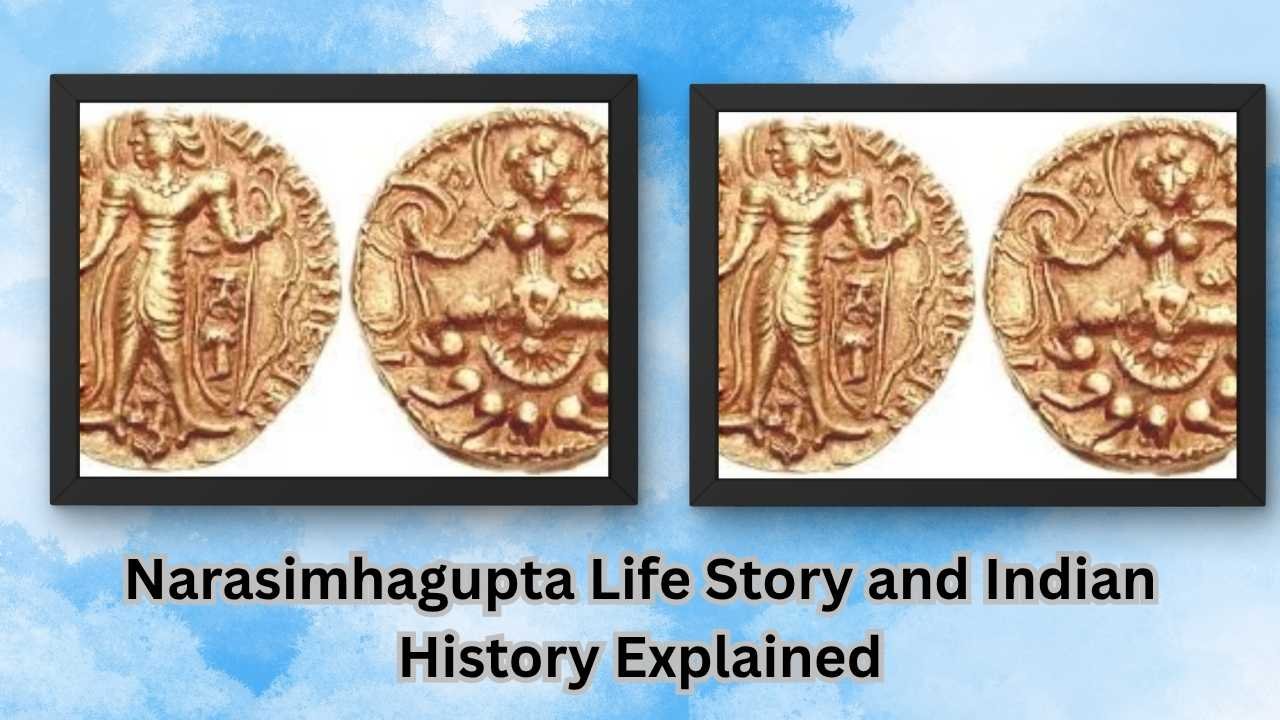
Coins of Narasimhagupta
Coins issued during Narasimhagupta’s reign show the traditions of the Gupta Empire. These coins often contained:
- Images of kings
- Religious symbols
- Sanskrit inscriptions
However, the quality and quantity of coins were lower than under earlier Gupta rulers because the empire’s economy had weakened. Narasimhagupta Life Story and Indian History Explained
Challenges During His Rule
Narasimhagupta faced many serious problems, including:
- Hun Attacks
Foreign invasions weakened the empire.
- Economic Problems
Trade and revenue reduced during this period.
- Political Instability
Several regional rulers became independent.
- Decline of Gupta Power
The Gupta Empire was slowly losing control over many regions.
Despite challenges, Narasimhagupta worked to protect his kingdom and traditions.
Military Efforts
Narasimhagupta maintained an army to defend the empire from enemies. His military included:
- Infantry soldiers
- Cavalry
- Elephant forces
His key military achievement was resisting Mihirakula, the Hun ruler.
Death of Narasimhagupta
Narasimhagupta is believed to have died around 530 CE.
Death Place
The exact place of his death is not known.
Age at Death
At the time of his death, historians estimate Narasimhagupta was around 60 years old.
After Narasimhagupta’s death, the Gupta Empire’s decline accelerated, and it eventually collapsed.
Achievements of Narasimhagupta
- Resistance Against the Huns
He played an important role in stopping foreign invasions.
- Support for Buddhism
He protected Buddhist culture and religious institutions.
- Compassionate Leadership
Historical stories describe him as a merciful ruler.
- Preservation of Gupta Traditions
He continued the Gupta dynasty’s cultural legacy.
Importance in Indian History
The Gupta Empire is often called the Golden Age of India. Narasimhagupta was among the last rulers who tried to preserve its glory.
He is important because:
- He defended India from invaders.
- He encouraged religious harmony.
- He supported culture and learning.
- He showed mercy even to enemies.
His reign represents the final phase of Gupta greatness.
Conclusion
Narasimhagupta was a brave and kind ruler in difficult times who tried to preserve the Gupta Empire and Indian culture. His support for Buddhism, resistance against the Huns, and compassion made him important in Indian history.
Even today, Narasimhagupta is remembered as one of the notable rulers of the later Gupta dynasty. Narasimhagupta Life Story and Indian History Explained
FAQs About Narasimhagupta
1) Who was Narasimhagupta?
Narasimhagupta was a later Gupta emperor who ruled from around 495 CE to 530 CE.
2) What was another name of Narasimhagupta?
He was also known as Narasimhagupta Baladitya.
3) Who was the father of Narasimhagupta?
His father was Purugupta.
4) Which invader did Narasimhagupta fight?
He fought against the Hun ruler Mihirakula.
5) Was Narasimhagupta a supporter of Buddhism?
Yes, he strongly supported Buddhism and religious learning.
6) When did Narasimhagupta die?
He is believed to have died around 530 CE.
Read More: