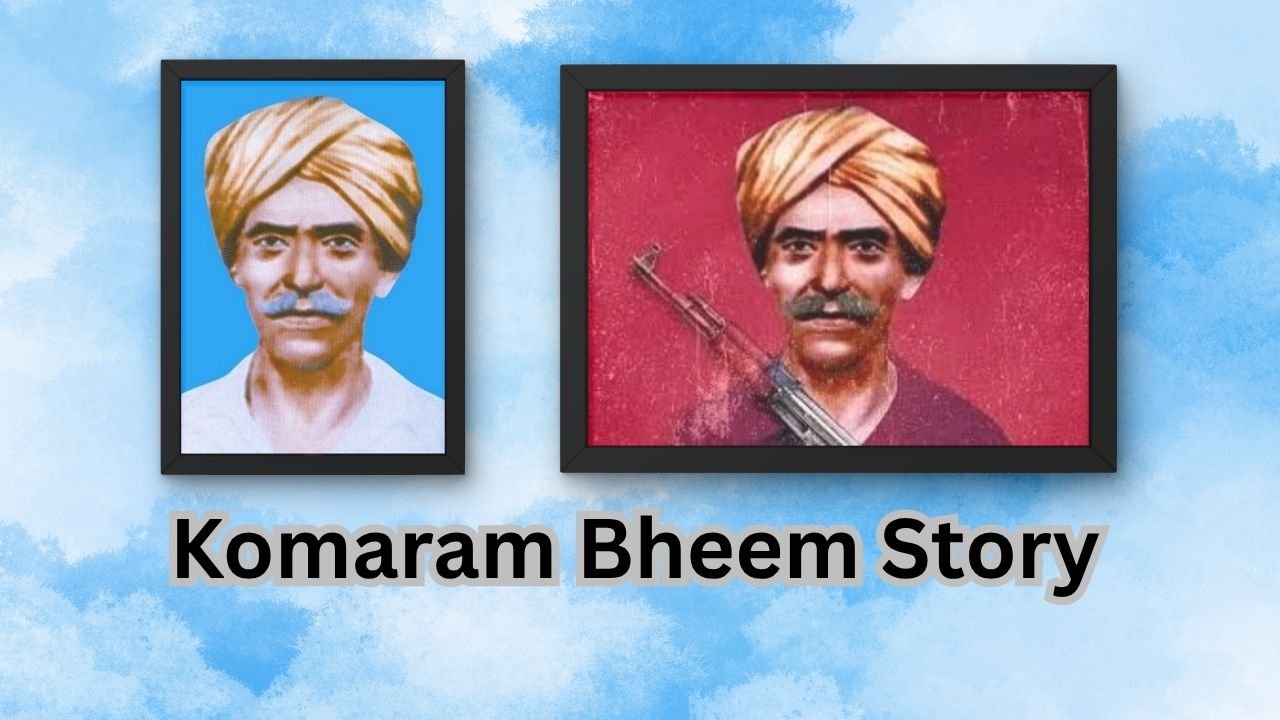
Komaram Bheem Story, a brave tribal freedom fighter from Telangana, waged a relentless battle against injustice, striving for his people’s rights. His renowned slogan, “Jal, Jangal, Zameen,” signified water, forest, and land, encapsulating the heart of his mission. His life’s narrative is remarkable, defined by courage, struggle, and self-sacrifice.
Early Life of Komaram Bheem
Born on 22 October 1901 in Sankepalli village, located in present-day Telangana, Komaram Bheem belonged to the Gond tribe. The forests were his home his community depended on nature and instilled in him essential survival skills.
From a young age, Bheem witnessed his people’s hardships, forging his resilience in the crucible of adversity. Each challenge hardened his spirit and sharpened his resolve, gradually setting him on a destined path toward justice.
Parents and Family
Bheem’s father, Komaram Chinnu, led as a tribal leader and did not tolerate injustice. His mother, Som Bai (also known as Som Bai Komaram), offered devoted support to their family.
Tragedy found them when Bheem’s father was victimized by the cruelty of the forest officials. The devastating moment seared into Bheem’s heart—transforming him from a grieving son into a relentless seeker of justice.
Siblings
Although there is little historical information about his siblings, Bheem’s upbringing unfolded in a world where unity and community always stayed central. This close-knit environment would later guide his leadership. Komaram Bheem Story
Marriage and Children
Komaram Bheem was married however, little is known about his wife. The personal lives of many tribal leaders from that era remain undocumented and mysterious.
Details about his children remain scarce. Still, his reputation endures, built upon his relentless dedication to fighting for tribal rights. This singular focus helped shape his public legacy. Komaram Bheem Story
Education
Komaram Bheem did not receive a formal education in schools. He grew up in forest areas where there were no proper schools for tribal people.
Instead of formal schooling, he learned from real life, gaining knowledge of nature, survival, and leadership. These hard-won lessons would later help him become a formidable leader in his community.
Problems Faced by Tribal People
During this tumultuous era, Nizam Mir Osman Ali Khan ruled the region from 1911 to 1948. Under his reign, tribal communities endured relentless hardships, oppression, and constant injustice.
Prohibiting them from freely using forest resources, the authorities imposed heavy taxes on land and water. As a result, forest officials often mistreated tribal people and systematically stripped away their rights.
Living freely on their own land was denied to the tribal people. This restriction brought them anger and pain, adding fuel to their growing determination for change and resistance.
Jal, Jangal, Zameen Slogan
With unwavering conviction, Komaram Bheem gave his people a powerful slogan: “Jal, Jangal, Zameen.” The words unified and empowered them. This message rallied his community and unified their demands.
- Jal (Water): The right to use water resources
- Jangal (Forest): The right to live in forests
- Zameen (Land): The right to own land
This slogan, serving as the voice of tribal people, captured their fundamental needs and rights. Its enduring relevance continues to influence many movements, even today, clearly linking Bheem’s struggle to current issues.
Fight Against Nizam Rule
In the 1920s and 1930s, Komaram Bheem lit the torch of rebellion. He united his people, inspiring them to stand fiercely against tyranny.
He drew on his deep knowledge of the forests and adopted guerrilla warfare. Striking quickly and fighting through challenging terrain, Bheem’s understanding of the land transformed it into his greatest asset.
The movement grew stronger in the Adilabad region, attracting more tribal people to join Bheem. Their support turned him into a local symbol of hope and resistance.
Death of Komaram Bheem
Komaram Bheem died on 27 October 1940 in Jodeghat village, now in Telangana, drawing his courageous journey to a close.
A sudden attack by the Nizam’s army brought his life to an end at age 39, yet his dramatic passing immediately sparked a surge of inspiration among tribal people, propelling their struggle onward.
He sacrificed his life, but his spirit endured. His example continues to inspire many to persist in the quest for justice.
Legacy of Komaram Bheem
Today, Komaram Bheem stands tall as an iconic figure throughout India. He is especially remembered as a great tribal hero in Telangana.
- A memorial was established at Jodeghat in his honor, further solidifying his enduring place in regional memory.
- People share the story of his life to inspire the young generations. His legacy continues to resonate with the spirit of hope and bravery.
- Contemporary tribal movements still use his slogan as a rallying cry. Its influence has endured, echoing his original message.
- His life also served as inspiration for the film RRR.
Today, his spirit stands tall a timeless beacon of courage, equality, and tribal pride, linking generations past and present.
Awards and Recognition
Komaram Bheem received no official awards during his lifetime because he defied the ruling authorities.
However, posthumously, Komaram Bheem has been widely honored. The Telangana government built a memorial at Jodeghat.
- His birth anniversary is celebrated every year, connecting present generations with his enduring ideals.
- A district in Telangana is named Komaram Bheem Asifabad district (2016)
- Statues and parks are built in his honor.
People express their deep respect for his sacrifice through these honors, which underscore his legacy’s continued inspiration to communities today and strengthen the living memory of his cause. Komaram Bheem Story
Conclusion
Komaram Bheem’s life story is filled with bravery and determination. His example stands as a powerful testimony to fighting for tribal rights and opposing injustice.
The absence of formal education did not limit his greatness as a leader. Even today, the slogan “Jal, Jangal, Zameen” inspires people and carries his legacy forward.
His life urges us to champion justice, defend our rights, and face adversity with an unyielding spirit.
FAQs
1) Did Alluri Sitarama Raju and Komaram Bheem meet?
There is no historical evidence of Alluri Sitarama Raju and Komaram Bheem meeting. Living in different regions and eras, their movements for tribal rights were separate and independent.
2) Who is the real hero of Telangana?
Komaram Bheem is celebrated as the true hero of Telangana for fighting for tribal rights. Alluri Sitarama Raju’s sacrifice and courage are also admired. These stories continue to inspire justice and freedom.
3) What is the symbol of Komaram Bheem?
Komaram Bheem’s enduring symbol is his famous slogan: “Jal, Jangal, Zameen.” The phrase stands for tribal rights over water, forests, and land, and it represents freedom, equality, and resistance to the injustices faced by tribal communities.
4) Who is Komaram Bheem in real life?
A real tribal freedom fighter from Telangana, Komaram Bheem, was part of the Gond community. He fought against the Nizam’s rule for tribal rights, especially “Jal, Jangal, Zameen.
5) What is famous in Komaram Bheem ASIFABAD?
Komaram Bheem Asifabad is renowned for Bheem’s legacy and the Jodeghat memorial. Distinct tribal culture, forested landscape, and natural beauty draw visitors interested in heritage and peace—echoing Bheem’s lasting impact.
Read More: