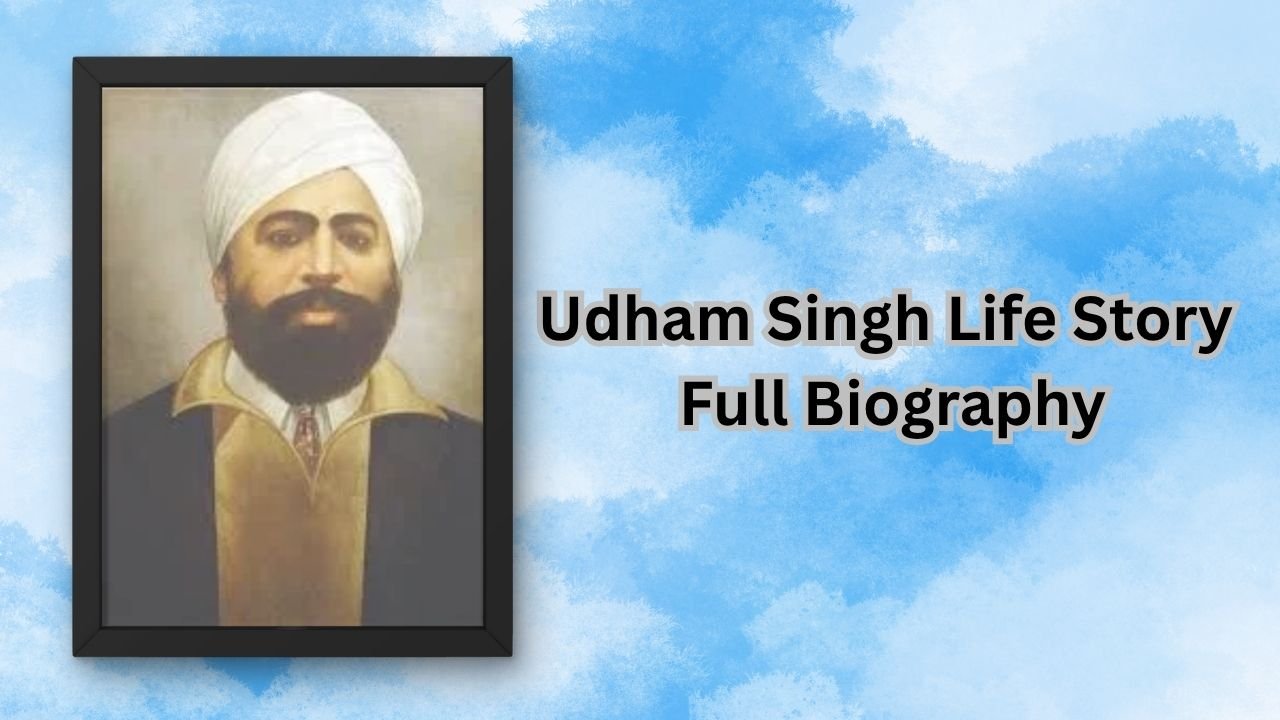
Udham Singh Life Story Full Biography was one of the bravest freedom fighters of India. He is remembered for taking revenge for the tragic Jallianwala Bagh massacre. His life story shows courage, patience, and deep love for the nation.
Early Life (1899–1918)
Born on 26 December 1899 in Sunam village, Punjab, India, his birth name was Sher Singh. Raised in poverty, Udham Singh endured many hardships as a child.
Losing both parents at a young age, Udham Singh and his elder brother entered the Central Khalsa Orphanage in Amritsar. It was here that Sher Singh received the name Udham Singh.
Life in the orphanage was challenging. Despite the difficulties, Udham Singh became strong and independent, learning discipline and developing a sense of responsibility early on.
Parents and Siblings
Udham Singh’s father, Tehal Singh, worked as a watchman at a railway crossing. His mother passed away when he was still a child. His family was very poor, and they faced many difficulties. Udham Singh Life Story Full Biography
His elder brother was Sadhu Singh. Sadly, Sadhu died young while still in the orphanage. Udham Singh became completely alone in the world after this loss.
These early tragedies left deep scars, but they also gave him incredible mental strength and resilience. He faced his challenges with courage and determination, preparing him for the battles that lay ahead.
Education
Udham Singh received his basic education at the Central Khalsa Orphanage in Amritsar. He learned to read, write, and acquire some vocational skills.
Though he lacked advanced formal education, Udham Singh was intelligent and curious. Life experiences fueled his strong thinking and decision-making abilities.
His education was simple, but it played an important role in shaping his personality and future path.
Marriage and Children
Strong historical evidence of Udham Singh marrying or having children is lacking. Most records indicate that he remained unmarried his entire life.
Udham Singh dedicated his life to India’s freedom struggle, focusing on fighting British rule and seeking justice for his people rather than family life. Udham Singh Life Story Full Biography
Jallianwala Bagh Massacre (1919)
The turning point in Udham Singh’s life came in 1919 during the Jallianwala Bagh massacre.
On 13 April 1919, thousands of Indians had gathered peacefully in Jallianwala Bagh in Amritsar. British officer Reginald Dyer ordered his troops to open fire on the unarmed crowd.
Hundreds were killed and many injured; blood filled the ground, and escape was impossible for those inside.
Udham Singh was at the scene and witnessed this terrible incident with his own eyes. This tragedy deeply shocked him. From that day, he decided to take revenge on those responsible.
Revolutionary Activities (1920–1939)
After the massacre, Udham Singh became involved in revolutionary activities between 1920 and 1939. He joined freedom movements and worked secretly against British rule.
He traveled to Africa, the United States, and Europe, connecting with other revolutionaries and gaining support for India’s independence.
Udham Singh was inspired by great freedom fighters like Bhagat Singh. He believed in strong action against injustice.
Carefully, Udham Singh planned his revenge for the Jallianwala Bagh massacre in these years, waiting patiently for the right opportunity.
Assassination of Michael O’Dwyer (1940)
Udham Singh believed that Michael O’Dwyer was one of the main persons responsible for the massacre.
On 13 March 1940, he finally carried out his plan. At Caxton Hall in London, Michael O’Dwyer was attending a meeting.
Entering the hall, Udham Singh shot O’Dwyer, killing him instantly. He viewed this act as revenge for the innocent lives lost during the 1919 massacre.
This incident shocked the British government and drew worldwide attention.
Arrest and Execution (1940)
After the assassination, Udham Singh was arrested immediately by the British police.
During the trial, Udham Singh openly confessed to his actions. He stated he was unafraid to die and acted for his country.
The court found him guilty and sentenced him to death.
On 31 July 1940, Udham Singh was executed by hanging in Pentonville Prison in London.
Age and Death Place
Udham Singh was 40 years old at the time of his death in 1940.
He died at Pentonville Prison in London, United Kingdom. Even in his final moments, he remained fearless and proud of his actions.
Legacy and Importance
Udham Singh stands as a national hero in India. His courage and sacrifice underscore his significance in India’s freedom struggle. Udham Singh Life Story Full Biography
Following India’s independence, in 1974, his remains were brought back to India and honored with respect.
He showed that the unwavering determination of one person, fueled by pain and hope, can change history in profound ways.
Conclusion
The life story of Udham Singh (1899–1940) powerfully demonstrates bravery, sacrifice, and patriotism. From poor orphan to fearless revolutionary, his journey inspires millions.
His revenge for the Jallianwala Bagh massacre symbolized justice, not simply anger. Udham Singh remains a true hero of India.
FAQS
1) How many languages does Udham Singh speak?
Udham Singh is believed to have known 4 to 5 languages: Punjabi, Hindi, Urdu, and English. He picked up basic knowledge of other languages during his revolutionary travels abroad.
2) Who took revenge for Jallianwala Bagh?
Udham Singh took revenge for the Jallianwala Bagh massacre by assassinating Michael O’Dwyer in London on 13 March 1940, avenging the innocent lives lost in 1919.
3) What were the last words of Udham Singh?
Official records do not capture Udham Singh’s exact last words. During his trial, he boldly declared pride in dying for India and taking revenge for the Jallianwala Bagh massacre.
4) Who was the main hero of Jallianwala Bagh?
There was no single hero of the Jallianwala Bagh massacre. The true heroes were the innocent people who gathered peacefully and made sacrifices, inspiring India’s freedom struggle against British rule.
5) Did Udham Singh cut his hair?
Yes, it is believed that Udham Singh cut his hair and beard, which is uncommon for Sikhs. He did this to hide his identity and move freely while planning revolutionary activities and carrying out his mission against British officials.
Read More: