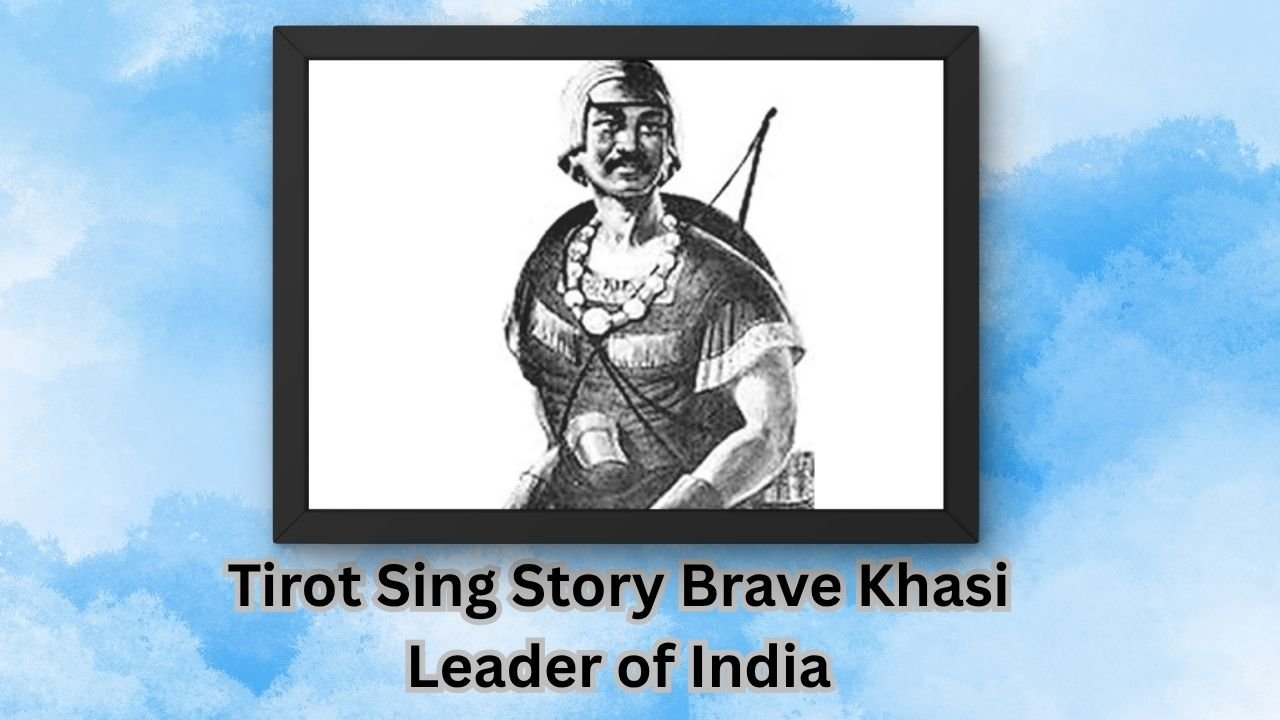
Tirot Sing Story Brave Khasi Leader of India was among India’s first tribal freedom fighters. He was a determined Khasi leader who opposed British rule in the 19th century. His story exemplifies courage, sacrifice, and devotion to his homeland. From his birth in 1802 to his death in 1835, Tirot Sing demonstrated steadfast leadership and inspired many.
Early Life of Tirot Sing (1802)
Tirot Sing was born in 1802 in the Khasi Hills, now in Meghalaya, India. He was part of the Khasi tribe, a proud community known for rich traditions and culture. From an early age, Tirot Sing exhibited leadership. He was courageous, perceptive, and deeply devoted to his people and homeland.
Tirot Sing later became the chief (Syiem) of Nongkhlaw, a prominent Khasi state. As a leader, he defended his kingdom and prioritized his people’s welfare.
Parents and Siblings
As with many tribal leaders of his time, there is limited historical information about Tirot Sing’s parents and siblings, as their histories were mostly passed down orally rather than in writing. It is believed, however, that he came from a respected Khasi royal family, an advantage that helped him become chief of Nongkhlaw and influenced his later leadership. Tirot Sing Story Brave Khasi Leader of India
Education
Tirot Sing did not receive a formal education through modern schooling. Instead, he learned through traditional Khasi systems. He gained knowledge about leadership, warfare, customs, and governance from elders in his community.
His education included:
- Understanding tribal laws and traditions
- Learning battle strategies
- Developing leadership skills
This traditional wisdom shaped him into a capable and insightful leader.
Marriage and Children
There is no clear historical record of Tirot Sing’s wife or children. Many details about his personal life remain unknown because there are no written documents from that era. Yet his primary concern was to lead his people and defend his land.
Languages Spoken
Tirot Sing primarily spoke Khasi, his people’s native language. He may have also understood basic trade communication or interactions with outsiders.
So, it is believed that he spoke:
- Khasi (main language)
- Possibly basic regional languages for communication
Conflict with the British (1826–1829)
The conflict began after the Treaty of Yandabo in 1826. After this treaty, the British East India Company gained control over Assam and nearby areas.
The British wanted to build a road through the Khasi Hills to connect Assam and Bengal. Initially, Tirot Sing agreed to this plan because he thought it would help in trade and development.
Soon, he realized the British intended to seize Khasi land, not just construct roads. This sparked distrust and tension. Tirot Sing Story Brave Khasi Leader of India
Revolt Against British Rule (1829)
In 1829, Tirot Sing openly resisted British authority. He led a determined revolt to protect his homeland and people.
Key points of the revolt:
- He used guerrilla warfare tactics.
- Khasi warriors attacked British camps suddenly.
- They fought with traditional weapons such as swords and arrows.
The revolt persisted for years. Though the British possessed superior arms, Tirot Sing’s resolve made him a formidable adversary.
Capture and Imprisonment (1833)
After years of defiance, Tirot Sing was ultimately seized by the British in 1833. His capture dealt a severe setback to the Khasi resistance movement.
He was taken far away from his homeland and imprisoned in Dhaka (present-day Bangladesh). Even in the loneliness of his cell, his unyielding spirit burned brightly he refused to lose hope or his pride.
Death of Tirot Sing (1835)
Tirot Sing died in 1835 while in prison.
Death Place
- Dhaka (now in Bangladesh)
Age at Death
- He was about 33 years old.
His death marked the end of a courageous chapter in India’s early struggle for freedom. His sacrifice earned him lasting honor in history
Awards and Recognition
Tirot Sing did not receive awards during his lifetime because India was under British rule. However, after independence, he has been honored in many ways:
- He is remembered as a national hero in Meghalaya.
- His death anniversary is observed every year.
- Statues and memorials are built in his honor.
- Schools and institutions are named after him.
His contributions are now recognized as integral to India’s struggle for independence.t.
Legacy of Tirot Sing
Tirot Sing’s legacy lives on in the beating hearts of his people. He is remembered not just for his actions but for the unwavering spirit and hope he instilled in those longing for freedom.
- His bravery against a powerful empire
- His leadership as a tribal chief
- His sacrifice for freedom
In Meghalaya, he symbolizes pride and bravery. His story exemplifies the importance of defending rights and homeland. Tirot Sing Story Brave Khasi Leader of India
Conclusion
Tirot Sing’s story is defined by courage, sacrifice, and determination. Born in 1802, he emerged as a fearless leader who fought British rule beginning in 1829. Even after he was captured in 1833, he remained resolute until his death in 1835 at the age of 33
Though much of his personal life remains shrouded in mystery, his bravery and leadership continue to live on in the hearts of many. Tirot Sing will always be remembered as a great tribal hero one who made the ultimate sacrifice for his people and inspired generations as one of India’s earliest freedom fighters.
FAQS
1) What were the last words of Tirot Sing?
There is no historical record of Tirot Sing’s final words. Nevertheless, he remained resolute and defiant in prison, demonstrating unwavering courage and loyalty to his land and people until his death in 1835.
2) In which jail did U Tirot sing “Died”?
Tirot Sing died in 1835 while imprisoned in a British jail in Dhaka. Captured in 1833 and held far from the Khasi Hills, he endured lonely years of suffering, showing remarkable courage and the ultimate sacrifice for his people.
3) What was the role of Tirot Sing?
Tirot Sing, the Syiem (chief) of Nongkhlawando, led the Khasi resistance against the British East India Company. He defended his territory, organized guerrilla warfare, and inspired early tribal resistance to colonial rule in India.
Read More: