World War 1 Key Events, Causes, and Historical Significance World War 1, also known as the First World War or the Great War, was one of the most important events in modern history. It lasted from 1914 to 1918 and involved many countries from Europe and other parts of the world. It changed political borders, affected millions of lives, and shaped international relations.
What Was World War 1?
World War 1 was a global military conflict fought between two major alliances:
The Allied Powers
- Britain
- France
- Russia
- Italy (joined later)
- United States (joined in 1917)
The Central Powers
- Germany
- Austria-Hungary
- Ottoman Empire
- Bulgaria
World War 1 mainly took place in Europe, but its effects reached countries across the world.
Causes of World War 1
Several factors led to the outbreak of World War 1, starting with nationalism.
- Nationalism
Many countries wanted to prove their power and independence. National pride often created tensions between nations.
- Militarism
European countries built large armies and navies. This military competition increased fear and suspicion among nations.
- Alliances
Countries formed alliances to protect themselves. If one country was attacked, its allies would join the fight. This system helped spread the conflict quickly. World War 1 Key Events, Causes, and Historical Significance
- Imperialism
European powers competed for colonies and resources worldwide. These rivalries increased tensions.
- Assassination of Archduke Franz Ferdinand
The immediate cause of the war was the assassination of Archduke Franz Ferdinand of Austria-Hungary on June 28, 1914, in Sarajevo. This event triggered declarations of war, spreading the conflict.
Key Events of World War 1
1914: The War Begins
After the assassination of Archduke Franz Ferdinand, Austria-Hungary declared war on Serbia. Due to alliance agreements, many countries soon joined the conflict.
Germany invaded Belgium and France, while Britain entered the war to support them.
1915: Trench Warfare Expands
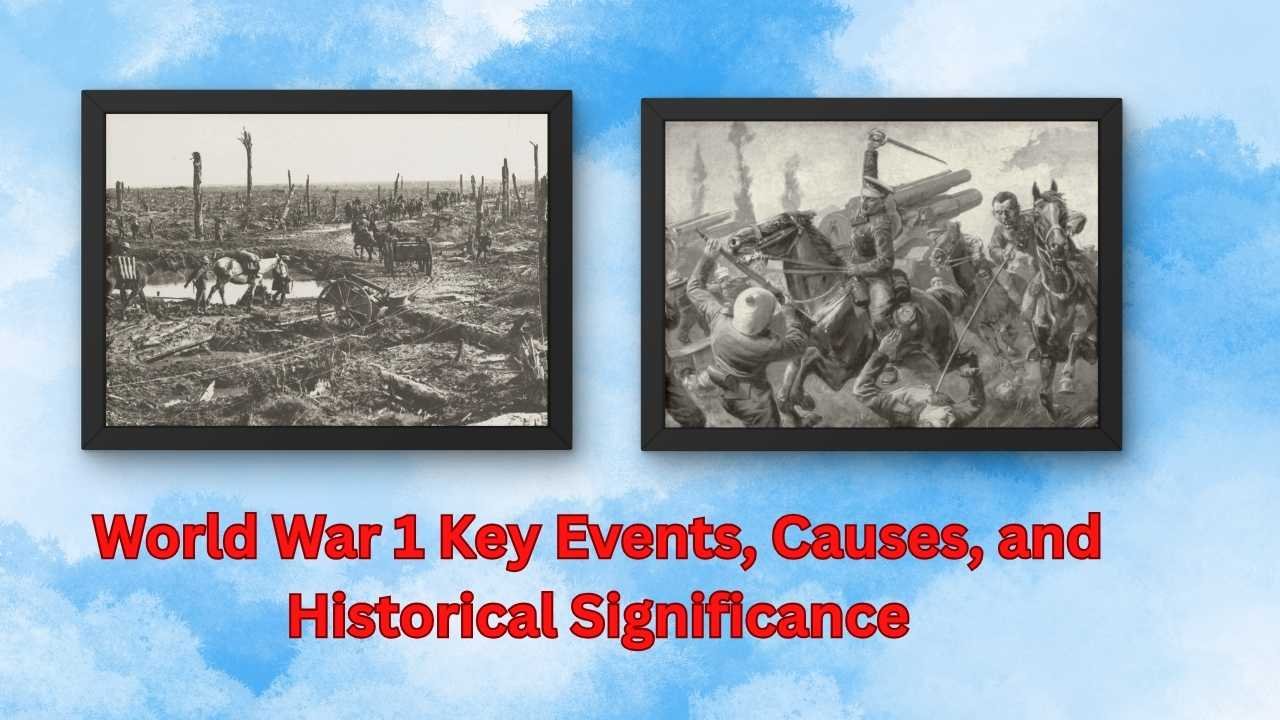
The Western Front became famous for trench warfare. Soldiers lived in long, narrow trenches and faced difficult conditions. Battles often resulted in heavy casualties with little territorial gain.
1916: Battle of Verdun
The Battle of Verdun was one of the longest and bloodiest battles of the war. France successfully defended the city, but both sides suffered huge losses. World War 1 Key Events, Causes, and Historical Significance
1916: Battle of the Somme
The Battle of the Somme was another major battle. It lasted several months and caused over one million casualties. Tanks were used for the first time during this battle.
1917: The United States Joins the War
The United States entered World War 1 on the side of the Allies. American troops provided fresh support and resources, strengthening the Allied forces.
1917: Russian Revolution
Russia experienced political upheaval and withdrew from the war after the Russian Revolution. This allowed Germany to focus more troops on the Western Front.
1918: The War Ends
The Allied forces launched successful offensives against Germany. On November 11, 1918, Germany agreed to an armistice, ending the fighting and bringing the war to a close.
The Importance of 1918
The year 1918 was a turning point in world history. It ended World War 1 and brought major political changes.
Why 1918 Was Significant
- The fighting officially stopped on November 11, 1918.
- Millions of soldiers returned home.
- Several empires collapsed, including the German, Austro-Hungarian, Ottoman, and Russian Empires.
- New countries emerged in Europe.
- Governments began rebuilding war-damaged economies and societies.
The events of 1918 reshaped the political map of Europe and influenced global affairs for decades.
Treaty of Versailles
In 1919, the Treaty of Versailles formally ended the war and set key terms for Germany.
Key terms included:
- Germany accepted responsibility for the war.
- Germany paid reparations.
- Germany reduced its military forces.
- Some German territories were taken away.
Many historians believe the treaty created conditions that later contributed to World War 2.
Impact of World War 1
Human Losses
World War 1 caused the deaths of millions of soldiers and civilians. Many more people were injured or displaced.
Economic Damage
Countries spent enormous amounts of money on the war. Cities, industries, and infrastructure were destroyed.
Political Changes
Several monarchies fell, and new nations emerged. Political systems changed across Europe and the Middle East.
Technological Advances
The war accelerated the development of military technology, including tanks, aircraft, submarines, and communication systems.
Social Changes
Women entered the workforce in greater numbers during the war. This contributed to increased support for women’s rights and voting rights in many countries.
Lessons from World War 1
World War 1 showed the devastating consequences of large-scale conflict. It highlighted the importance of diplomacy, international cooperation, and peaceful conflict resolution.
The war also led to the creation of the League of Nations, an early international organization designed to prevent future wars.
Conclusion
World War 1 was one of the most significant events of the 20th century. From 1914 to 1918, the conflict changed nations, societies, and global politics. The key events of the war, especially those of 1918, shaped the modern world and continue to influence international relations today.
Understanding the causes, major battles, and consequences of World War 1 helps us appreciate the importance of peace and cooperation among nations. These lessons remain relevant today and remind us of the value of avoiding large-scale conflict.
Read More:
APJ Abdul Kalam Life Story Humble Beginnings Peoples President
Virat Kohli Life Story From Childhood to Cricketing Greatness