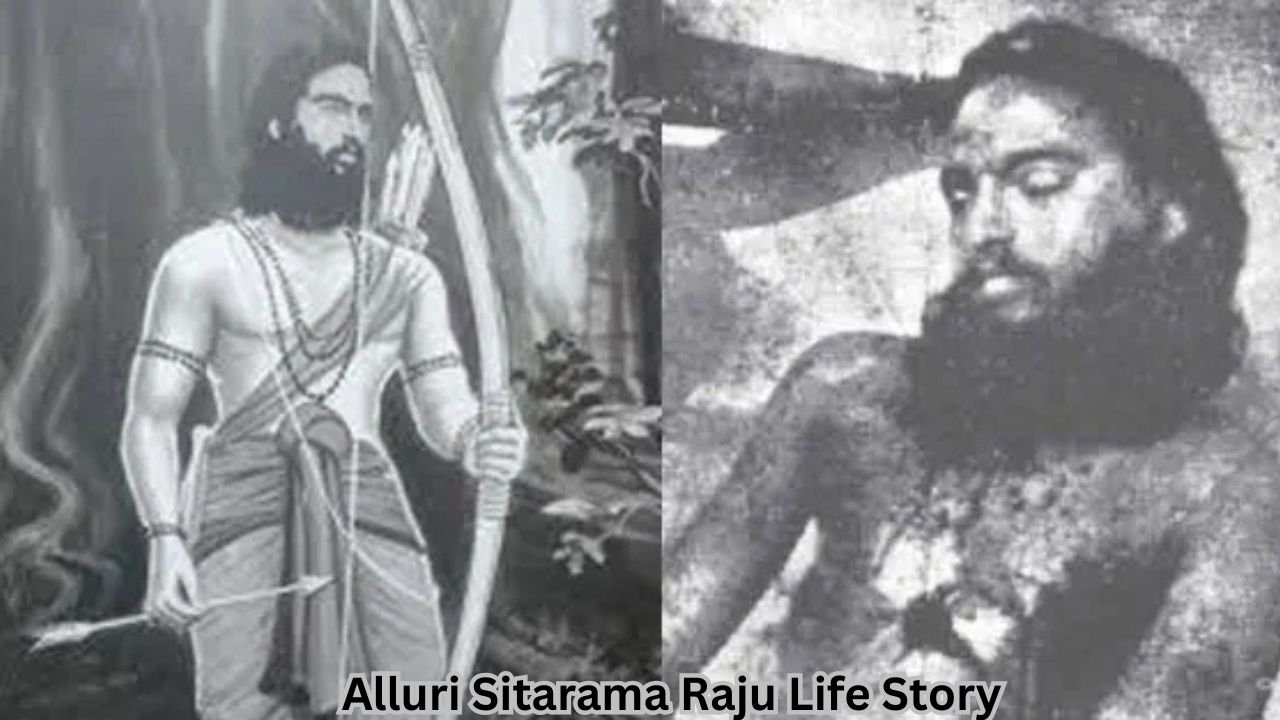
Alluri Sitarama Raju Life Story was one of the most courageous freedom fighters of India. He fought against British rule and stood for the rights of tribal people. Known as “Manyam Veerudu” (Hero of the Forest), his life story (1897–1924) is full of bravery, sacrifice, and leadership.
Early Life of Alluri Sitarama Raju (1897–1916)
Alluri Sitarama Raju was born on 4 July 1897 in Andhra Pradesh, India. He grew up in a simple family and lost his father when he was young.
- Father: Alluri Venkata Rama Raju
- Mother: Surya Narayanamma
His father worked in a government job and was known for discipline and honesty. His mother was kind and religious, which influenced Raju’s spiritual thinking.
Family Struggles After Father’s Death (Early 1900s)
When Raju was still young, his father passed away. This was a difficult time for the family. Alluri Sitarama Raju Life Story
After his father’s death, Raju and his family faced financial problems. His mother took care of the family and raised him with strong moral values. These struggles made him brave and independent.
Was Alluri Sitarama Raju Married?
There is no clear historical proof that Alluri Sitarama Raju got married. Most historical records and stories say that he remained unmarried throughout his life.
He chose to live a simple and spiritual life, focusing on helping people and fighting against British rule instead of building a family.
Early School Education (1900–1910)
Alluri Sitarama Raju started his basic education in local schools in Andhra Pradesh. From 1900 to 1910, he studied in different towns because his family often moved.
However, he was not very interested in regular classroom studies. He preferred learning about nature, people, and real-life situations. Even though he did not complete higher education, he was intelligent and observant.
Learning Through Travel (1910–1915)
Between 1910 and 1915, Raju traveled to many parts of India. These journeys became an important part of his education.
He learned about Indian culture, traditions, and the problems faced by common people under British rule. His travel experiences helped him gain knowledge that no classroom could provide.
Spiritual and Self-Education (1910–1916)
Alluri Sitarama Raju was deeply interested in spirituality. From 1910 to 1916, he spent time with saints and spiritual teachers.
He practiced meditation and simple living. This self-education gave him mental strength, discipline, and confidence. It also helped him develop leadership qualities. Alluri Sitarama Raju Life Story
Inspiration to Fight Against British Rule (1917–1921)
The period 1917 to 1921 was very important in his life, as it was the time when he got inspired to stand against injustice and become a freedom fighter.
Understanding British Injustice (1917–1918)
Between 1917 and 1918, Alluri Sitarama Raju closely observed the problems faced by tribal people in the forest areas of Andhra Pradesh.
The British government introduced strict forest laws, which stopped tribal communities from farming, collecting forest products, and living freely. These laws made their lives very difficult.
Raju felt deeply hurt by this injustice and started thinking about how to help them.
Connection with Tribal People (1918–1919)
From 1918 to 1919, Raju began living among the tribal people. He understood their lifestyle, struggles, and needs.
He built a strong bond with them and gained their trust. People believed in him and saw him as a leader who could protect their rights.
Influence of National Movements (1919–1920)
Between 1919 and 1920, the freedom movement in India was growing stronger. Leaders like Mahatma Gandhi inspired people to fight against British rule.
Although Raju followed his own path, he was influenced by the idea of freedom and justice. He believed that it was necessary to take action against British oppression.
Decision to Fight (1920–1921)
From 1920 to 1921, Alluri Sitarama Raju made a strong decision to fight against the British. He started organizing tribal people and preparing them for resistance.
He encouraged them to stand united and not fear the British authorities. His leadership and confidence gave hope to many people.
Beginning of a Revolutionary Path
This period (1917–1921) marked the beginning of Raju’s journey as a revolutionary leader. His experiences, observations, and determination led to the famous Rampa Rebellion (1922–1924) in the following years.
Background of the Rampa Rebellion (Before 1922)
Before 1922, tribal people in the forest areas of Andhra Pradesh were suffering under British rule. The British introduced strict forest laws that stopped them from farming and using forest resources.
These laws destroyed their traditional lifestyle and created anger among the tribal communities. Alluri Sitarama Raju understood their pain and decided to lead them against British injustice.
Beginning of the Rebellion (1922)
The Rampa Rebellion officially started in 1922 under the leadership of Alluri Sitarama Raju.
He organized tribal people and trained them to fight. Raju used guerrilla warfare techniques, which included sudden attacks and quick movements in forest areas.
In 1922, his group attacked several police stations and collected weapons to strengthen their fight.
Major Events and Struggles (1922–1923)
Between 1922 and 1923, the rebellion became stronger. Raju and his followers continued attacking British forces and government offices. Alluri Sitarama Raju Life Story
His knowledge of forest areas helped him escape from British soldiers many times. The British government was shocked by his strategies and bravery.
British Reaction and Final Phase (1923–1924)
From 1923 to 1924, the British increased their efforts to capture Alluri Sitarama Raju. They sent more soldiers and used a stronger force to stop the rebellion.
After a long struggle, the British finally managed to capture him.
Capture and Death of Alluri Sitarama Raju (1924)
Alluri Sitarama Raju was a fearless freedom fighter who gave his life for India’s independence. His death in 1924 was a tragic but heroic moment in Indian history.
Capture by British Forces (1924)
In 1924, after a long and difficult search, British forces finally captured Alluri Sitarama Raju.
He had been hiding in forest areas and moving from place to place, but the British used strong military power and intelligence to track him down.
Death and Place (7 May 1924)
Alluri Sitarama Raju was executed on 7 May 1924 by British officers.
He was tied to a tree and shot dead in Koyyuru, a forest area in present-day Andhra Pradesh. This cruel act was meant to stop the rebellion and create fear among the people.
Age at the Time of Death
At the time of his death in 1924, Alluri Sitarama Raju was only 26 years old. Despite his young age, he showed great courage and sacrifice for the nation.
Impact of His Death
His death shocked many people, but it also inspired others to continue the fight for freedom.
Even after his death, his bravery and leadership remained alive in the hearts of the people, especially among tribal communities.
FAQS
What is Alluri Sitarama Raju famous for?
Alluri Sitarama Raju is famous for leading the Rampa Rebellion (1922–1924) against British rule. He fought for tribal rights, used guerrilla warfare, and became known as “Manyam Veerudu” for his bravery, leadership, and sacrifice for India’s freedom.
What is the caste of Alluri Sitarama Raju?
Alluri Sitarama Raju belonged to the Kshatriya (Raju) community, traditionally known as a warrior class in South India.
Did Komaram Bheem and Alluri Sitarama Raju meet?
There is no historical evidence that Komaram Bheem and Alluri Sitarama Raju ever met. They fought separately against British and feudal oppression in different regions and periods, but both became legendary tribal freedom fighters in Indian history.
What is the slogan of Alluri Sitarama Raju?
Alluri Sitarama Raju did not have a widely recorded official slogan. However, his actions reflected the spirit of freedom and resistance. He inspired tribal people to fight British injustice and stand united for their rights, courage, and independence.
Read More: